













HYROX is an indoor fitness race that combines running with functional workout stations. Athletes run 1 kilometer, complete one workout station, and repeat that pattern eight times for a total of 8 kilometers of running and 8 workouts. The stations include SkiErg, sled push, sled pull, burpee broad jumps, rowing, farmer’s carry, sandbag lunges, and wall balls.
Unlike events where the workouts change from competition to competition, HYROX uses a standardized global format. That makes it easier for beginners to understand the challenge and easier for competitive athletes to compare times. It is part endurance race, part functional strength test, and part pacing challenge.
For Hyperwear athletes, HYROX is also a perfect example of Hybrid Race™ Training: the blend of running, loaded movement, strength endurance, grip, trunk stability, and repeatable power under fatigue.
If you are already preparing for a race and want a full equipment-based training plan, read our companion guide: Training for HYROX at Home with Hyperwear Equipment.
What is HYROX?
HYROX is a fitness race built around a simple repeatable structure: run, complete a workout station, and repeat. Every standard HYROX race includes 8 x 1 km runs and 8 functional workout stations.
The format rewards athletes who can do more than run fast or lift heavy. To perform well, you need aerobic endurance, muscular endurance, efficient transitions, grip strength, leg strength, trunk stability, and the ability to keep moving when your heart rate is high.
That is why many athletes describe HYROX as a “hybrid” event. It sits between running and functional fitness. You are not just racing the clock on a run course, and you are not just completing strength movements in isolation. You are proving that you can run, work, recover, and repeat.
How does a HYROX race work?
A standard HYROX race follows the same basic pattern from start to finish:
- Run 1 km
- Complete 1 functional workout station
- Repeat until you complete 8 runs and 8 stations
That gives every athlete a total of 8 km of running, broken into intervals, plus eight functional fitness challenges. The result is a race that rewards pacing, strength endurance, smart transitions, and the ability to run under fatigue.
The hardest part for many first-time athletes is not one single station. It is the accumulation. A sled push feels different after a hard opening SkiErg. A sandbag lunge feels different after 6 km of running. Wall balls feel very different when they are the final station of the day.
What are the 8 HYROX workout stations?
The HYROX race format is built around these eight workout stations:
| Order | Station | Distance or reps | What it tests |
|---|---|---|---|
| 1 | SkiErg | 1,000 m | Pulling endurance, core, lats, rhythm, and breathing control |
| 2 | Sled Push | 50 m | Leg drive, bracing, traction, and power endurance |
| 3 | Sled Pull | 50 m | Posterior chain, grip, trunk stability, and rope management |
| 4 | Burpee Broad Jump | 80 m | Full-body stamina, breathing control, and mental toughness |
| 5 | Row | 1,000 m | Aerobic power, pacing, and posterior chain endurance |
| 6 | Farmer’s Carry | 200 m | Grip, posture, trunk stiffness, and loaded walking |
| 7 | Sandbag Lunges | 100 m | Leg endurance, balance, shoulder tolerance, and breathing |
| 8 | Wall Balls | 100 reps | Squat endurance, coordination, accuracy, and finishing capacity |
HYROX race divisions: Open, Pro, Doubles, and Relay
HYROX is designed for a wide range of athletes, from first-time fitness racers to experienced competitors. The main divisions include Open, Pro, Doubles, and Relay.
Open
Open is the standard individual race division. It is often the best starting point for athletes who want to complete the full race format on their own using standard race weights.
Pro
Pro follows the same race structure but uses heavier weights on key stations. It is intended for more experienced athletes who have built the strength, running capacity, and station efficiency to handle the added load.
Doubles
Doubles allows two athletes to race together. Both athletes complete the runs together, then split the work at the stations. This can make HYROX more approachable for new athletes and more tactical for experienced pairs.
Relay
Relay lets a team of four split the race. Each athlete completes a portion of the running and workout stations. This is a strong option for gyms, corporate teams, friends, and athletes who want to experience HYROX without completing the full individual race.
How is HYROX different from CrossFit, DEKA, and obstacle course racing?
HYROX sits in the middle of running and functional fitness, but its biggest difference is standardization. The race format is known before you start: 8 x 1 km runs and the same eight workout stations in the same order.
That makes HYROX different from many CrossFit-style competitions, where workouts may vary by event and may include more technical barbell or gymnastics skills. HYROX movements are demanding, but the format is predictable and easier to train specifically.
HYROX is also different from obstacle course racing because there are no mud obstacles, climbing rigs, water crossings, or unpredictable outdoor terrain. HYROX is typically held indoors on a controlled course, which makes the event easier to standardize and easier for spectators to follow.
Compared with DEKA-style fitness events, HYROX places a heavier emphasis on running volume. The 8 km of total running makes pacing and compromised running a major part of the race.
For athletes, that means training can be very specific. You can build a plan around compromised running, sled push and pull strength, grip endurance, sandbag lunges, wall balls, and repeatable pacing.
How to train for HYROX
The best HYROX training does not treat running and strength as separate worlds. You need both, but you also need to practice moving between them.
That is where Hybrid Race™ Training comes in. Hybrid Race™ Training is about building the qualities that matter when running meets loaded functional movement: endurance, strength, repeatability, durability, transitions, and recovery between efforts.
A complete HYROX training plan should include:
- Aerobic base training: Build the ability to run comfortably for longer periods.
- Run intervals: Practice 400 m to 1 km repeats at controlled race pace.
- Compromised running: Run immediately before or after strength stations.
- Sled push and pull work: Build lower-body drive, traction, and trunk stiffness.
- Loaded carries: Train grip, posture, and breathing while moving under load.
- Sandbag lunges: Practice race-specific position, rhythm, balance, and turns.
- Wall ball capacity: Build squat endurance and overhead accuracy under fatigue.
- Transition practice: Learn how to enter and exit stations without wasting time.
If you are training at home, you may not have access to a sled, SkiErg, rower, or full commercial gym setup. That does not mean you cannot prepare effectively. With the right Hyperwear equipment, you can simulate many of the strength, conditioning, and movement demands of the race.
For a full station-by-station plan, see our guide: Training for HYROX at Home with Hyperwear Equipment.
HYROX sled push and sled pull: why the turf matters
The sled push and sled pull are two of the stations most likely to surprise first-time HYROX athletes. The listed weight is only part of the challenge. The surface, sled runners, lane conditions, moisture, shoe grip, and your pacing can all change how the sled feels.
Athletes often report three main issues:
- The race sled feels heavier than the sled at their home gym.
- Their shoes slip on the carpet or turf during the push.
- The sled does not always feel equally smooth from one training environment to another.
That does not mean you should panic on race day. It means you should train for friction, traction, and pacing, not just strength.
Sled push tips
- Test your shoes before race day. A fast running shoe is not useful if it slips during the sled push.
- Use short, powerful steps. Think steady pressure and constant movement, not frantic sprinting.
- Keep a strong body angle. Get low enough to drive through the floor without losing control.
- Brace your trunk. The sled push is not just legs. You need a stiff torso to transfer force.
- Do not redline too early. The sled push comes early in the race. If you empty the tank here, the next six stations will feel much harder.
- Train under fatigue. Try repeats such as 400 m run + 10–15 m heavy sled push.
Sled pull tips
- Organize the rope. Rope management can save time and reduce frustration.
- Use your legs and hips. Do not turn the sled pull into an arms-only movement.
- Stay braced. Avoid yanking with a rounded back when fatigue sets in.
- Use repeatable pulls. Short, controlled pulls often beat wild, inconsistent efforts.
- Practice footwork. Learn how to step back, gather rope, and keep the sled moving smoothly.
- In Doubles, communicate before the station. Know when you will switch before you get there.
What to do if the sled feels stuck
If the sled feels much harder than expected, reset before you panic. Get lower, shorten your steps, drive through the floor, and focus on steady movement. A few controlled breaks are usually better than grinding until your legs blow up before the next run.
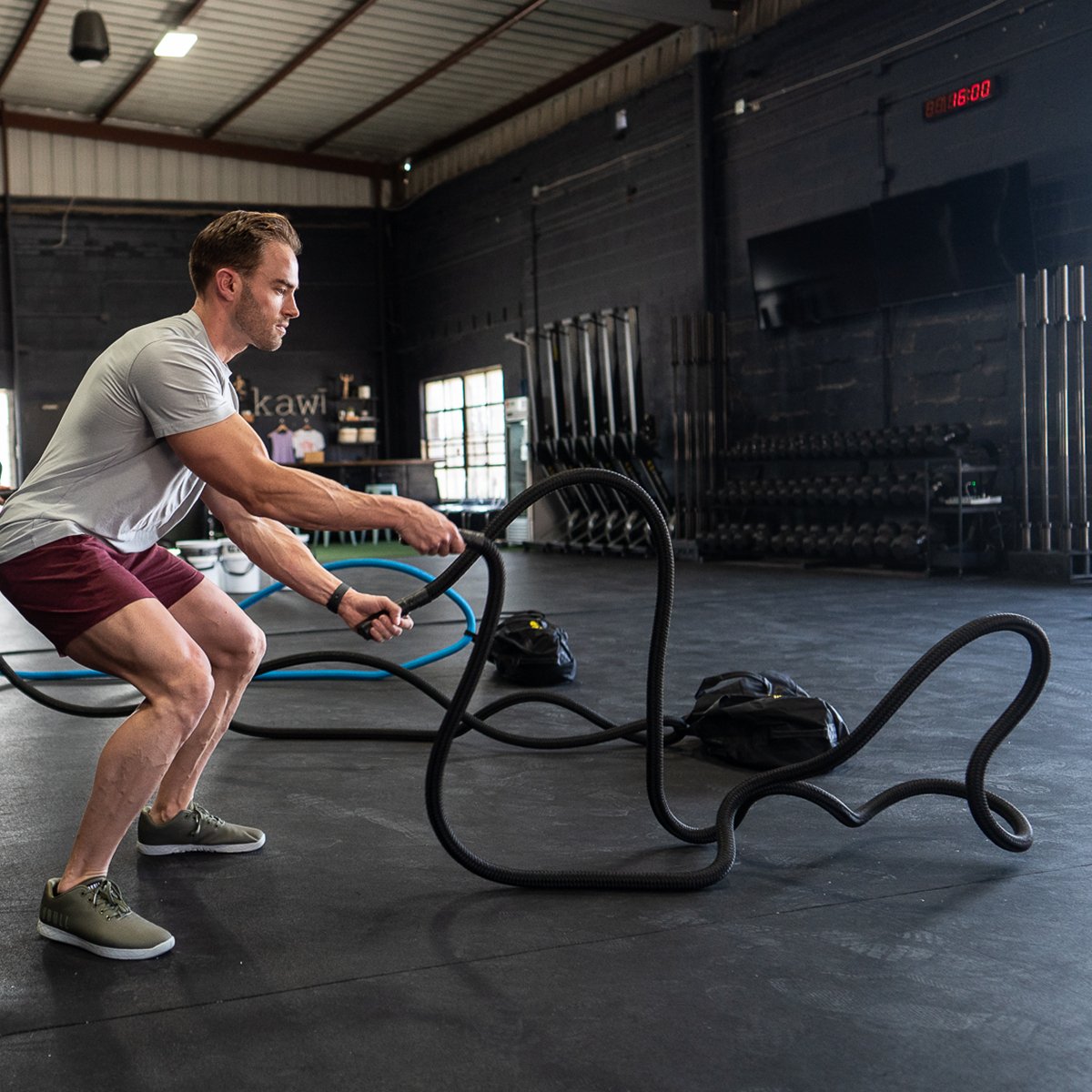
For at-home sled simulation, heavy sandbag pushes, drags, and pulls can help build the same qualities: leg drive, trunk stiffness, grip, and the ability to move heavy resistance while breathing hard. The Hyperwear Workout Sandbag System is a practical option for heavier drag and push simulation, especially when paired with a towel, strap, or rope on a suitable surface.
Train sandbag lunges with Hybrid Race™ Training
The sandbag lunge comes late in the race, after 6 km of running and six workout stations. By then, your legs, lungs, grip, and posture are already under fatigue. That is why HYROX sandbag lunge training should be more than “do lunges with weight.”
You need to practice the carry position, foot rhythm, breathing, turns, and the ability to restart after fatigue.
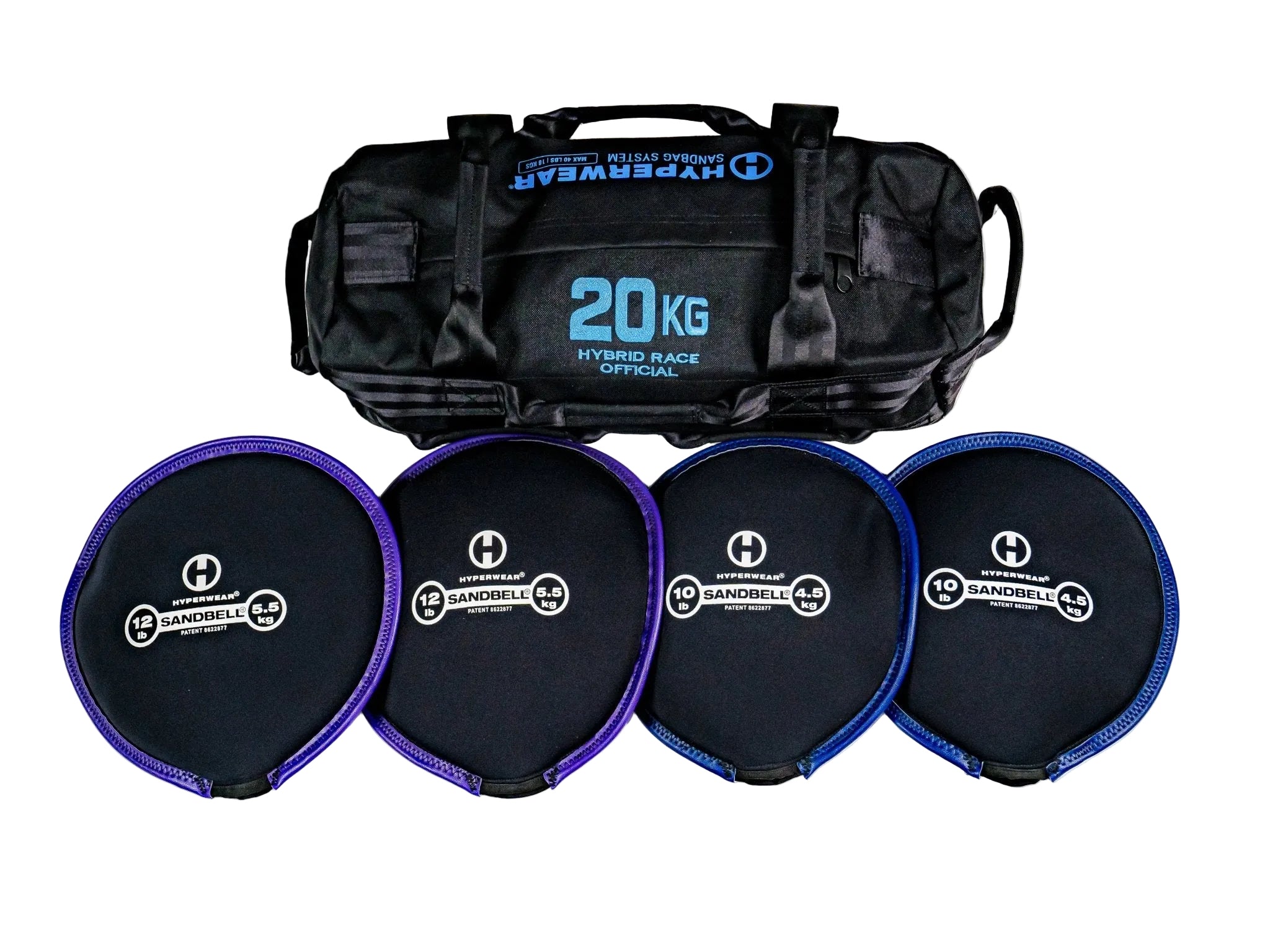
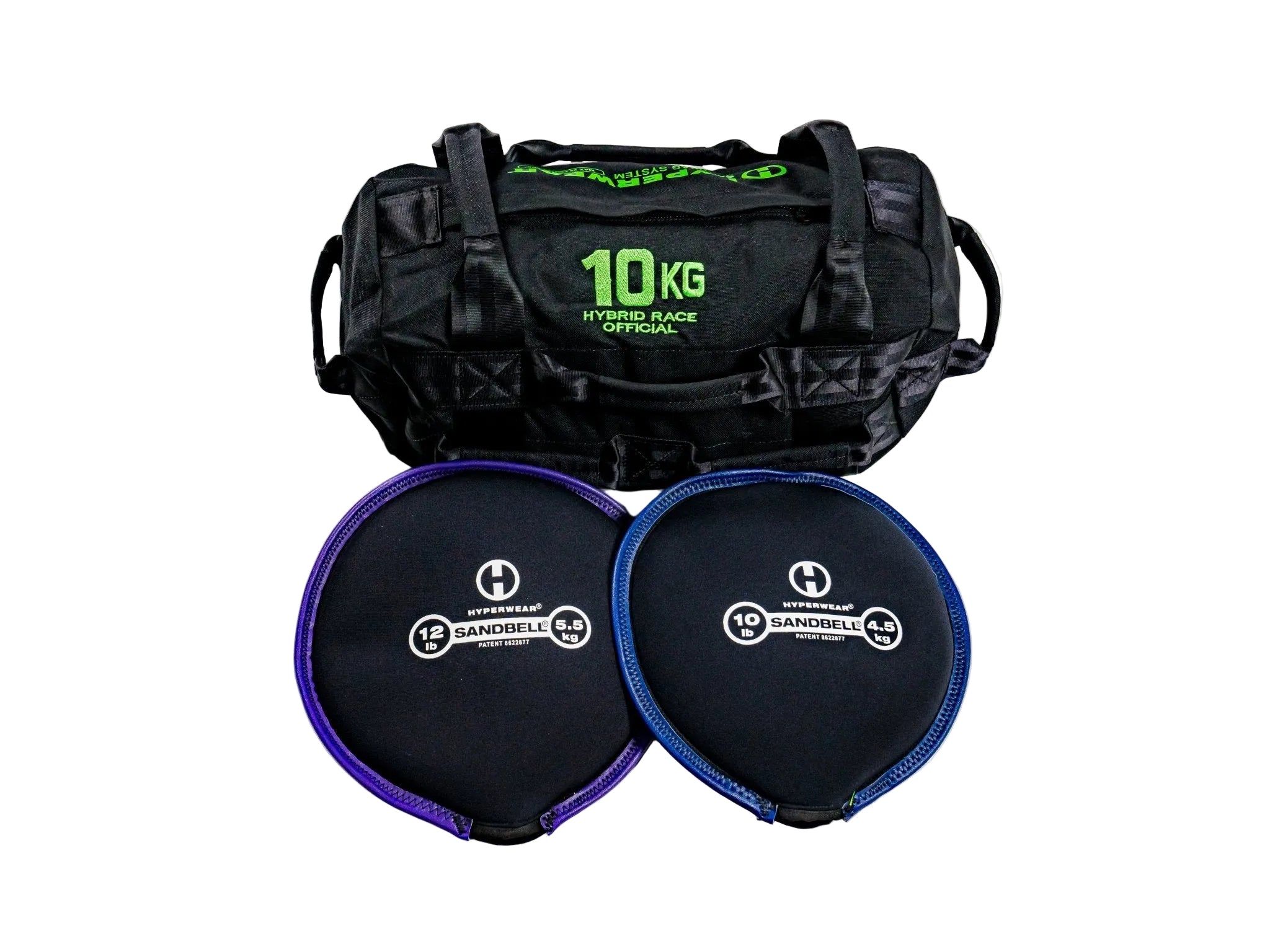
For race-specific prep, the Hybrid Race™ Training Sandbag System is built for HYROX-style sandbag lunge practice, shoulder carries, loaded lunges, front-loaded squats, and hybrid race circuits. The system is available in 10 kg and 20 kg options, making it a direct fit for many standard race-prep lunge loads and a practical tool for coaches, home gyms, and commercial facilities.
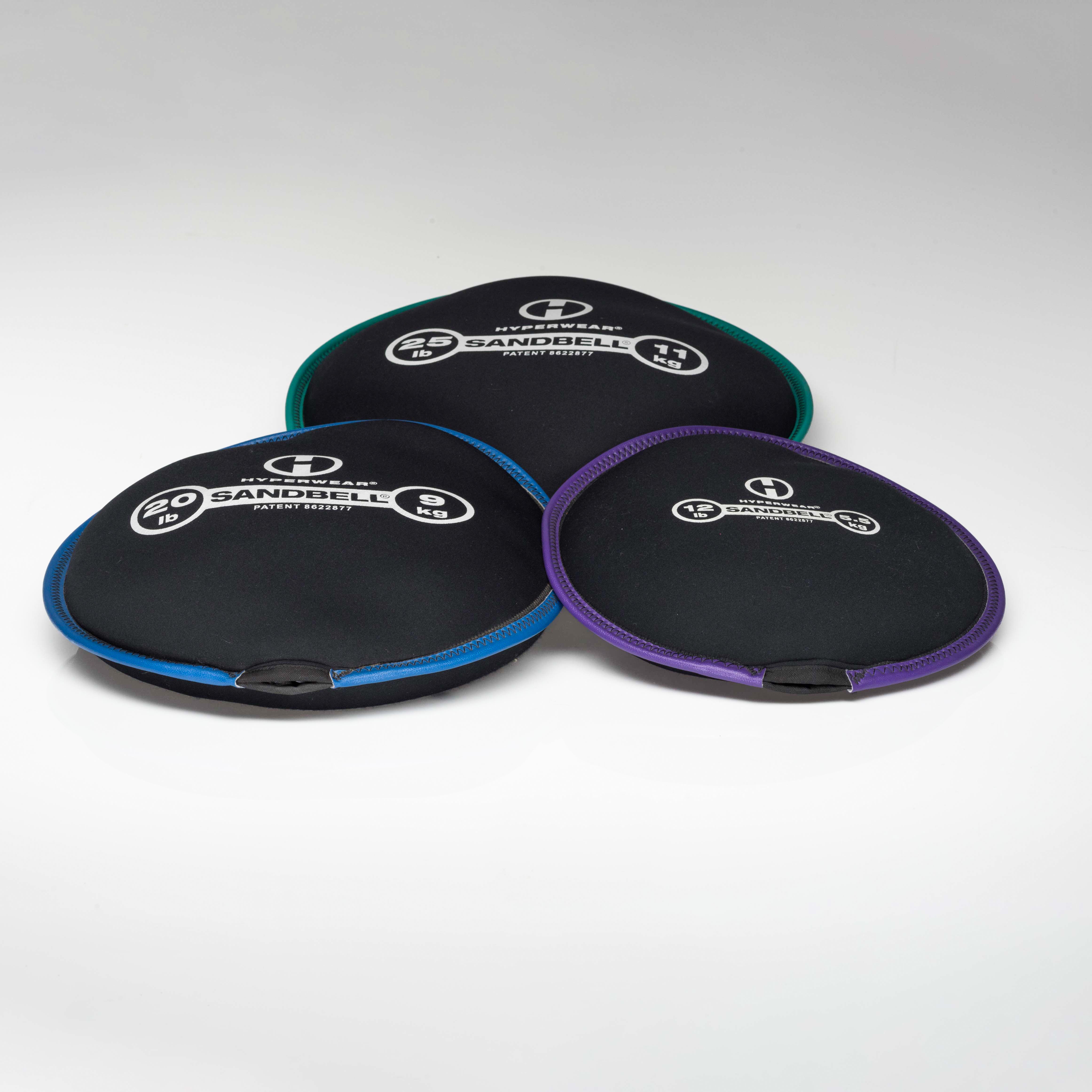
The Hybrid Race™ Training Sandbag System uses contained SandBell® filler weights, so sand stays inside the filler bags instead of loose inside the shell. It is designed for cleaner indoor training, simple storage, and versatile functional strength work beyond lunges.
Sandbag lunge standards to practice
- Carry the sandbag across both shoulders.
- Use alternating lunges.
- Touch the trailing knee to the floor on each rep.
- Stand tall at the top with hips and knees extended.
- Practice turns and restarts under fatigue.
- Build toward the full 100 m race distance.
Simple sandbag lunge progression
Start with controlled sets before chasing full race distance:
- 3 sets of 10 alternating lunges per side
- 4 sets of 20–30 m with the sandbag across both shoulders
- 3 rounds of 400 m run + 20 m sandbag lunges
- Progress toward 1 km run + 100 m sandbag lunges
For more sandbag exercises, progressions, and full-body workout ideas, read our Sandbag Workout Guide.
Best Hyperwear gear for HYROX and Hybrid Race™ Training
You do not need a full commercial gym to build many of the qualities required for HYROX. The right equipment can help you train running durability, strength endurance, trunk stability, grip, and loaded movement at home, outdoors, or in a small training space.
Hybrid Race™ Training Sandbag System
The Hybrid Race™ Training Sandbag System is the most race-specific Hyperwear tool for HYROX sandbag lunge practice. Use it for lunges, shoulder carries, front-loaded squats, step-ups, cleans, and conditioning circuits.
Hyperwear Workout Sandbag System
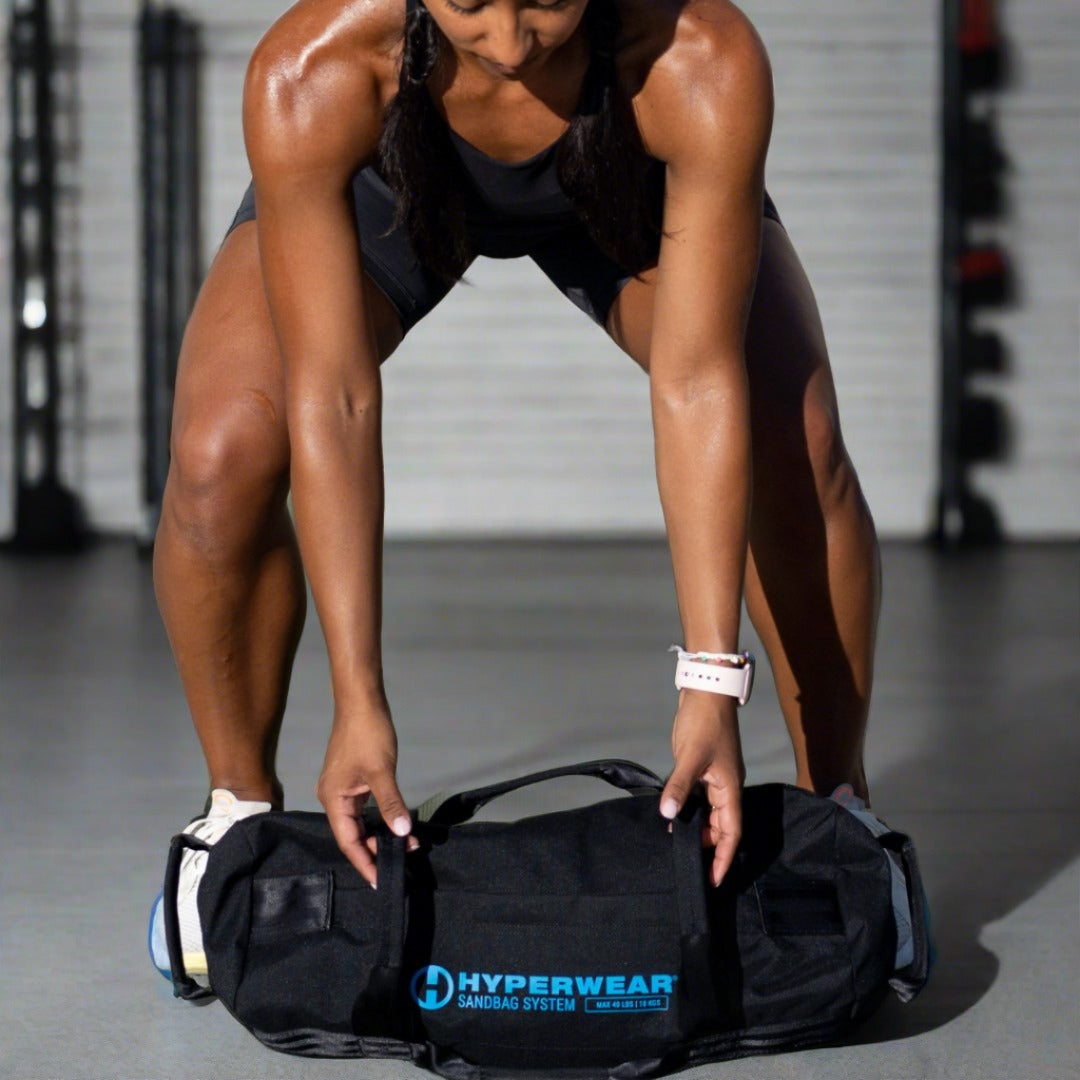
The Hyperwear Workout Sandbag System is useful for heavier loaded carries, drags, pushes, pulls, shouldering, and general strength work. It can be a strong choice for athletes looking to simulate sled-style resistance when a sled is not available.
SandBell®, SteelBell®, and SoftBell® tools
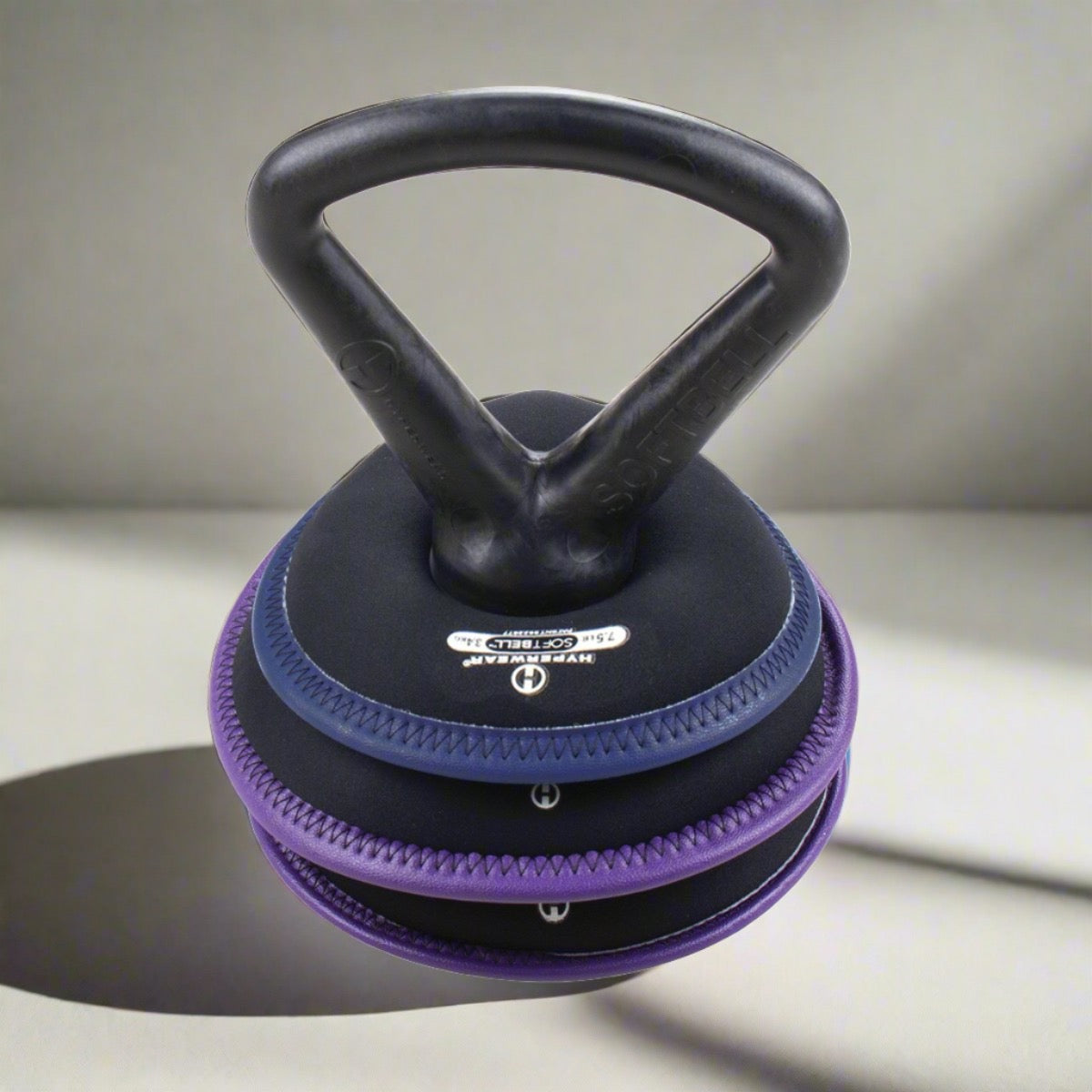
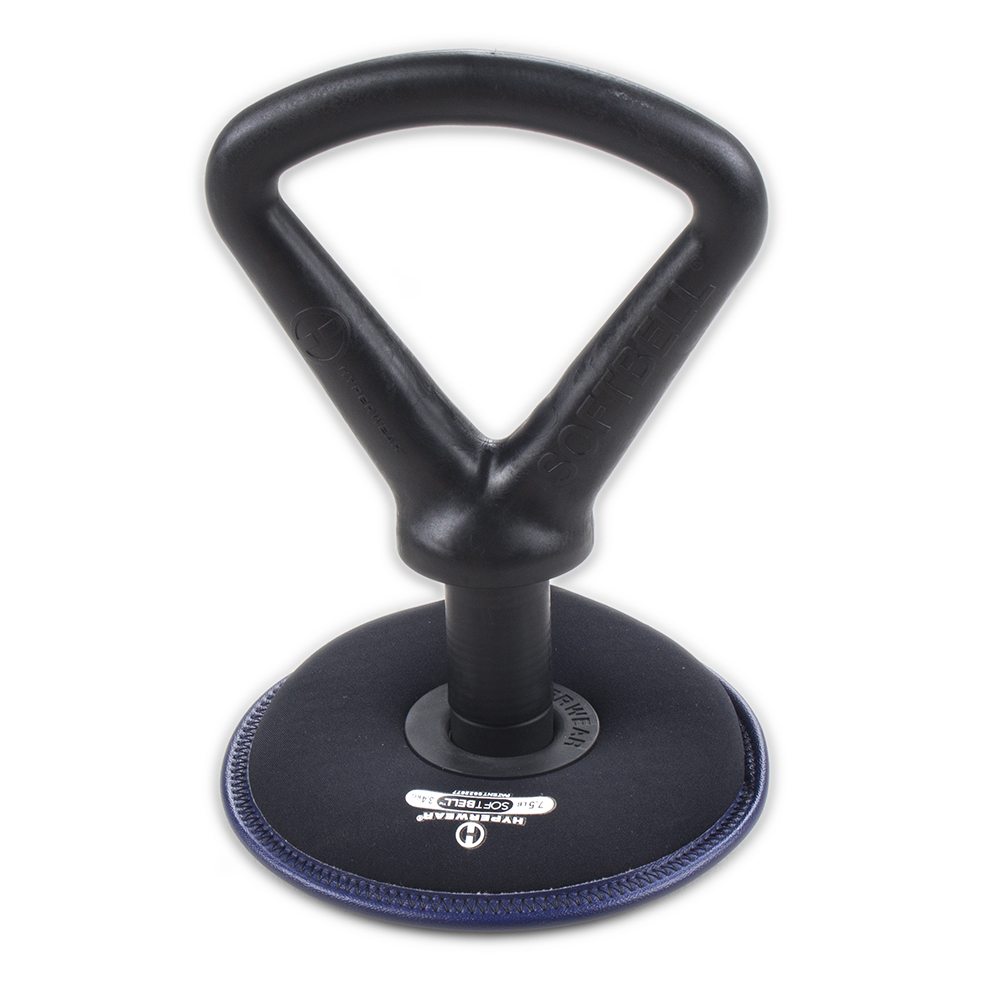
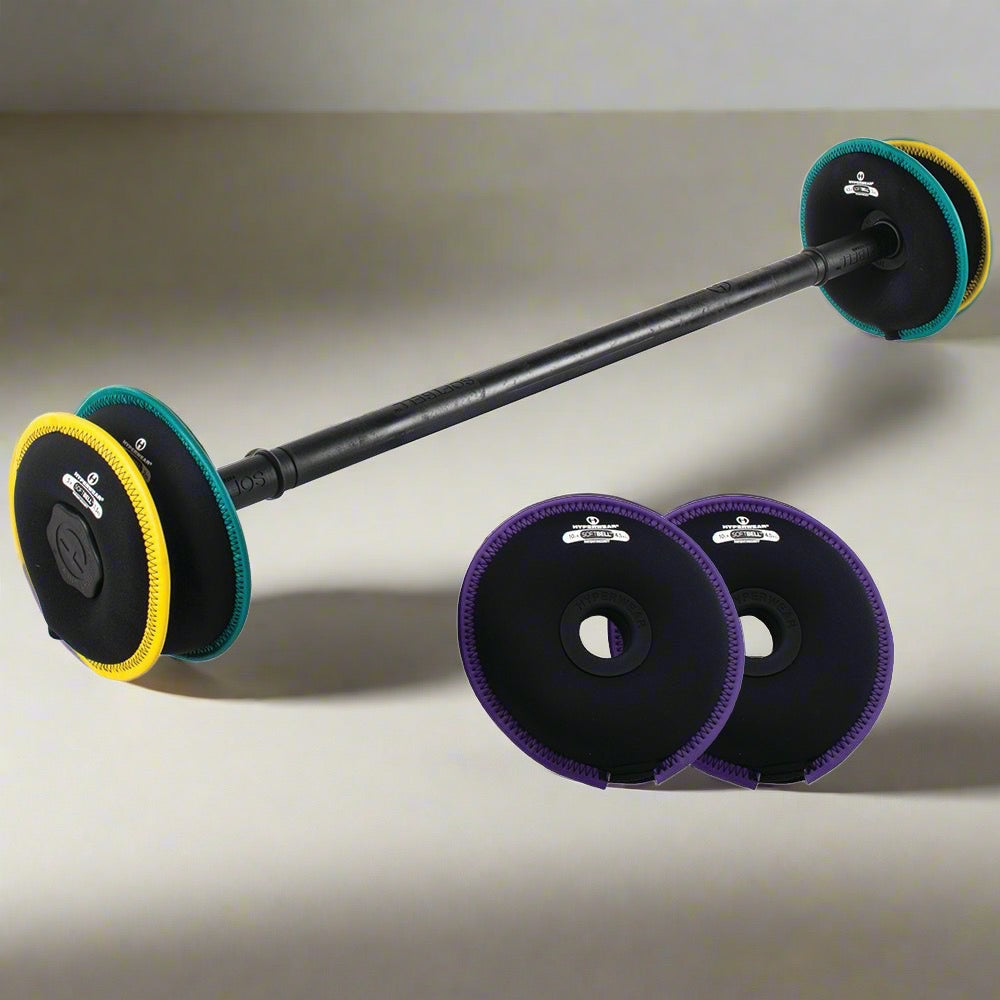
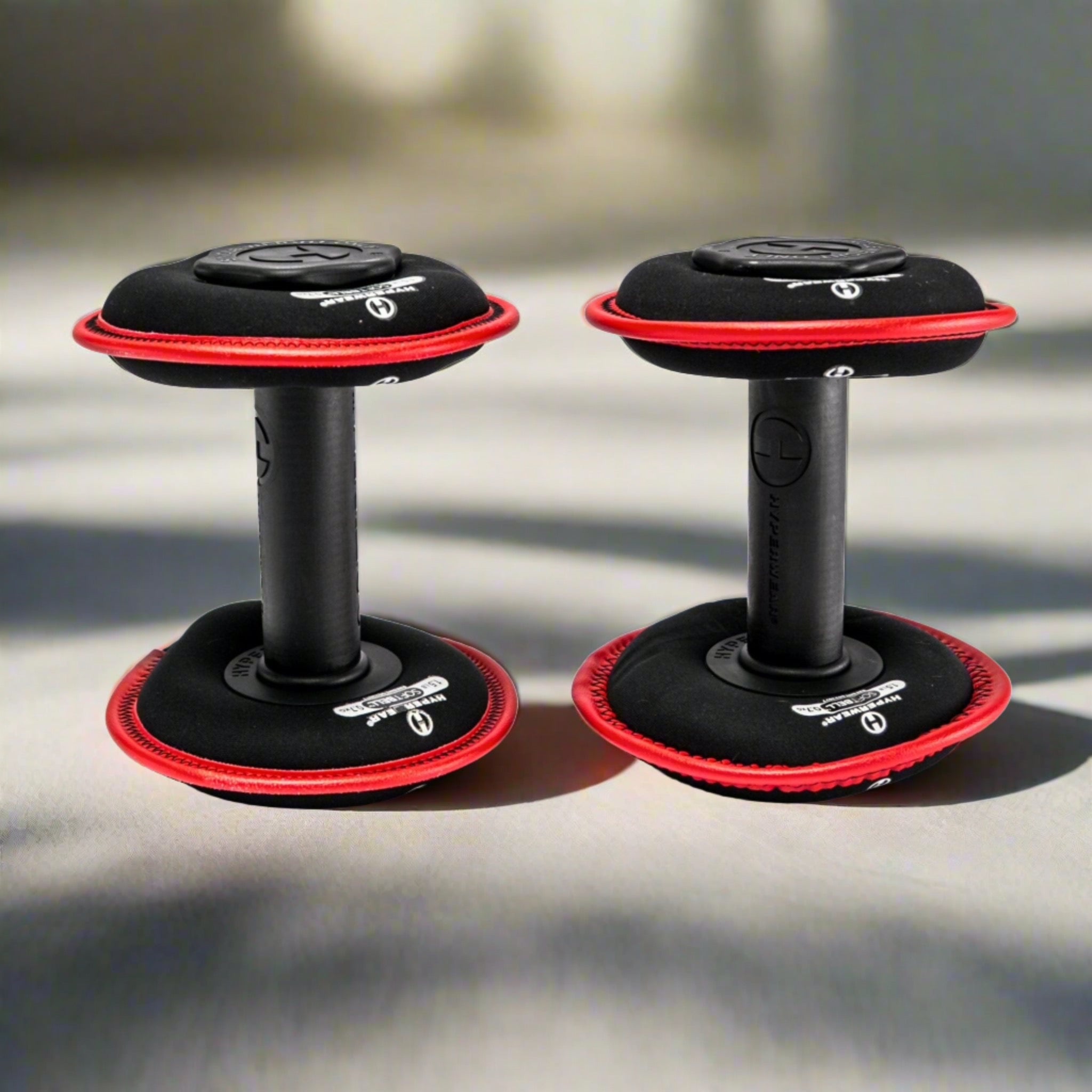
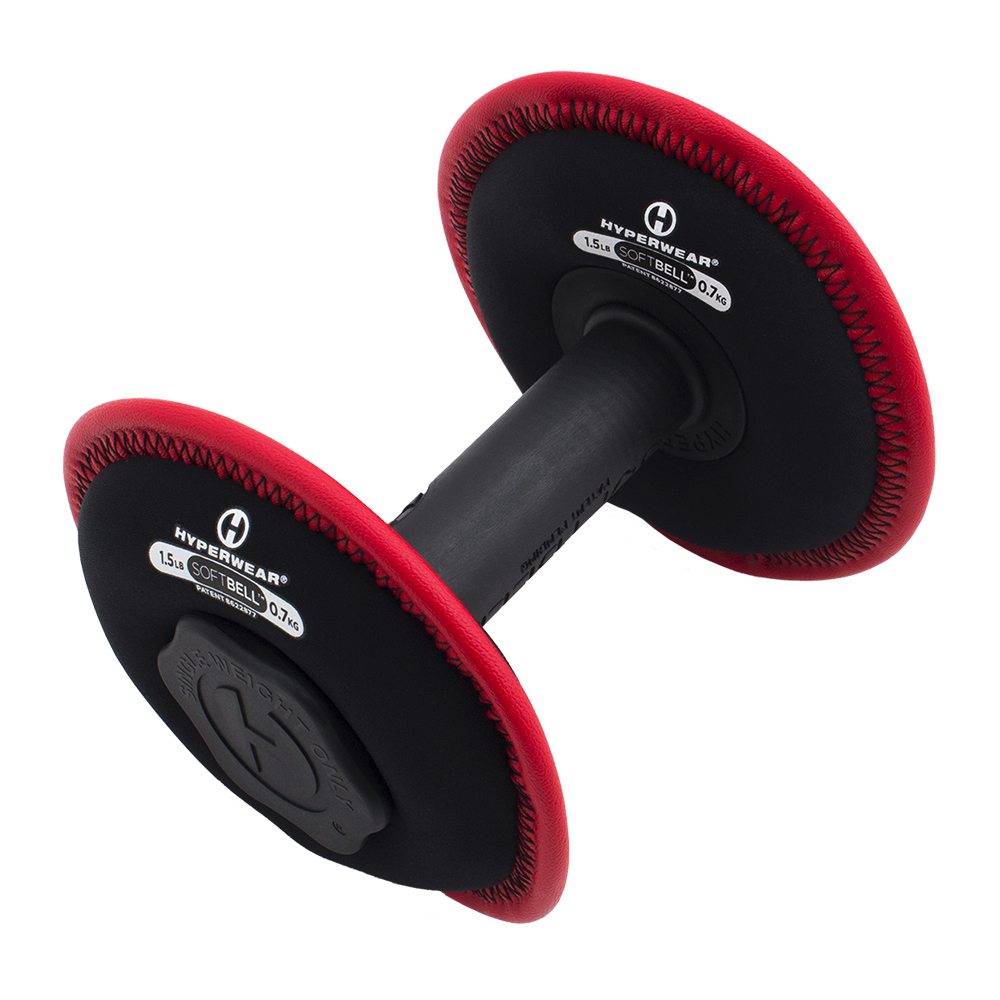
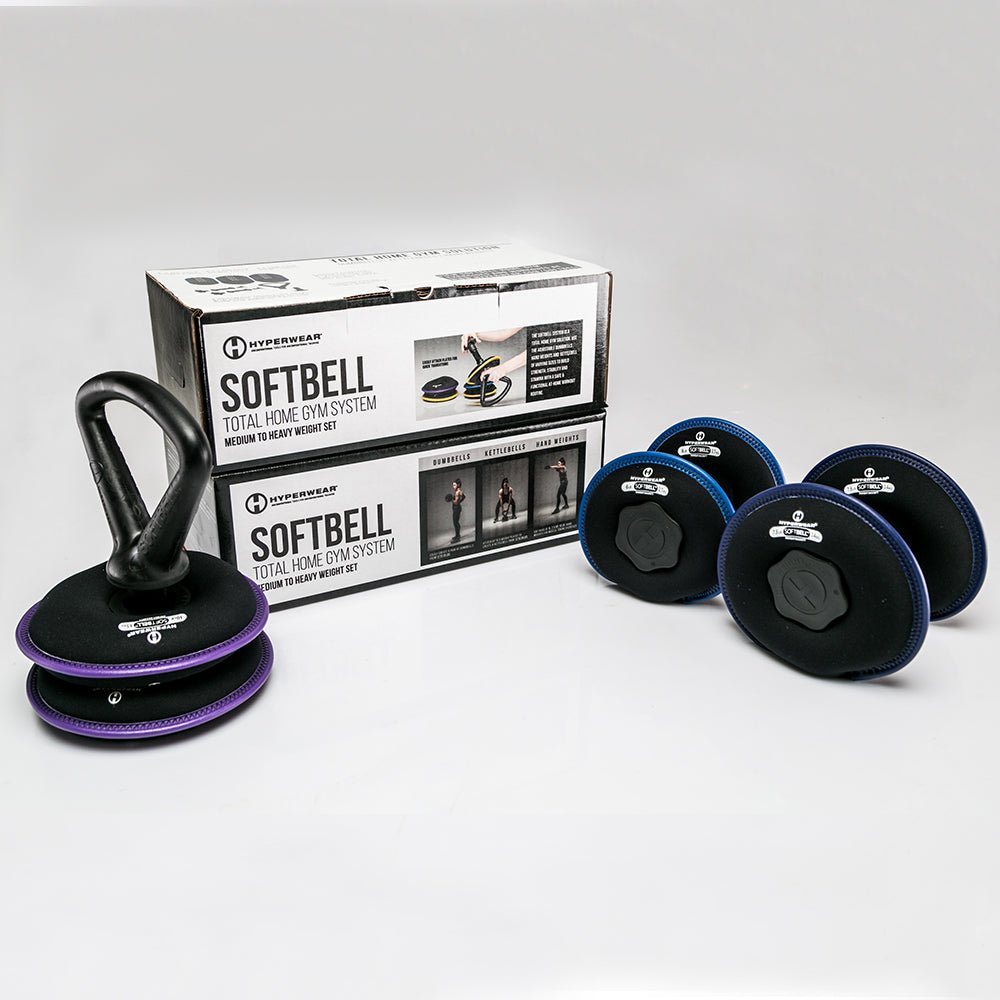
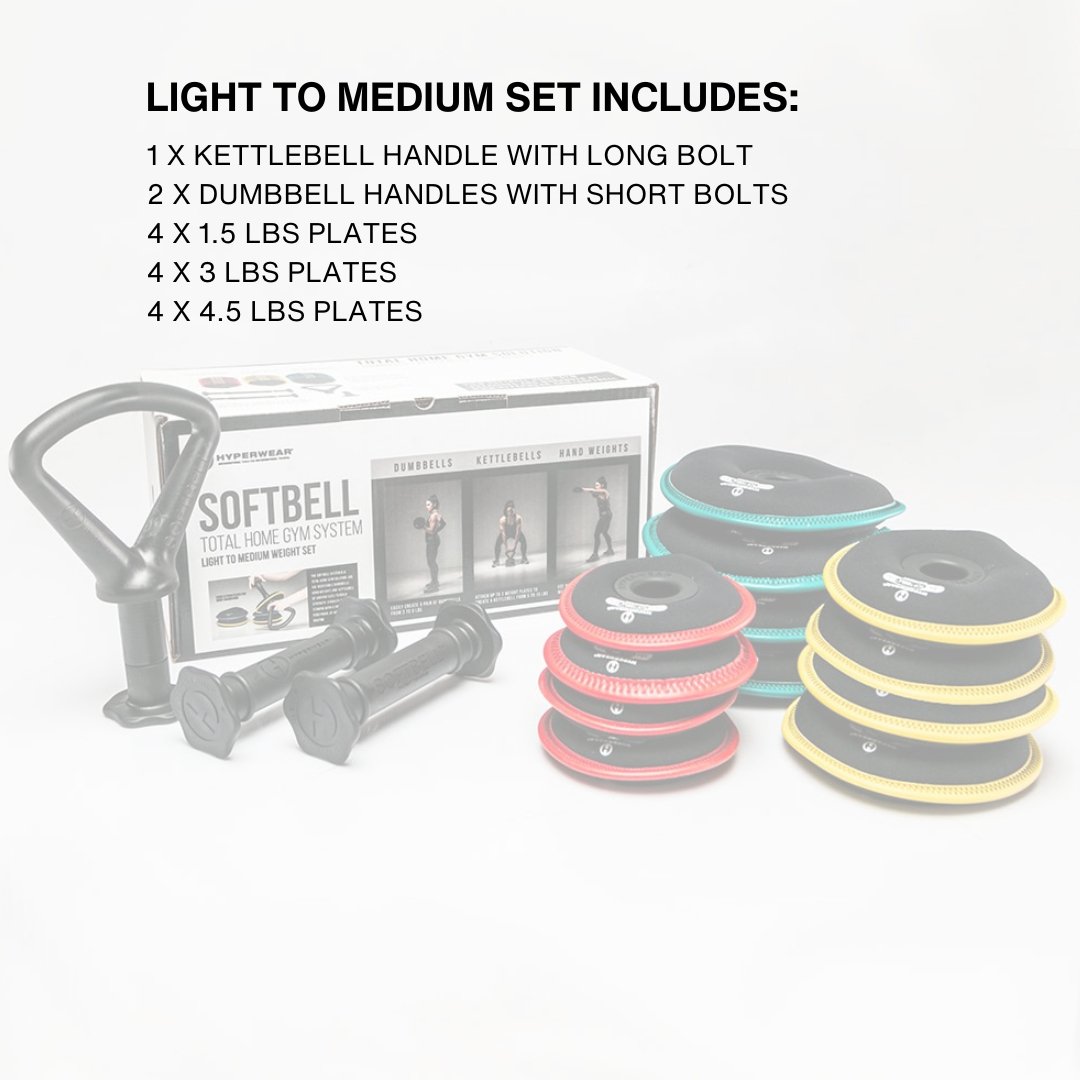
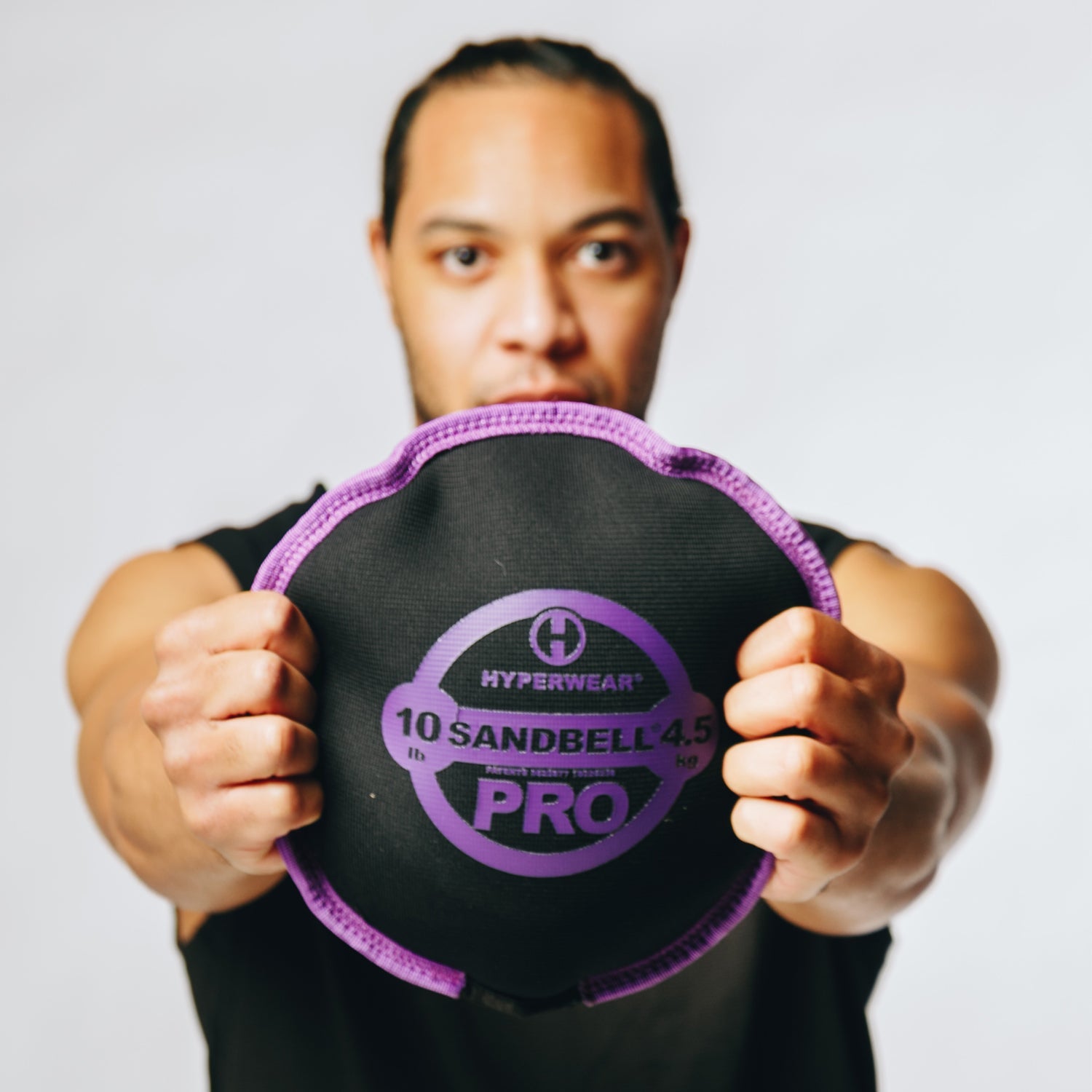
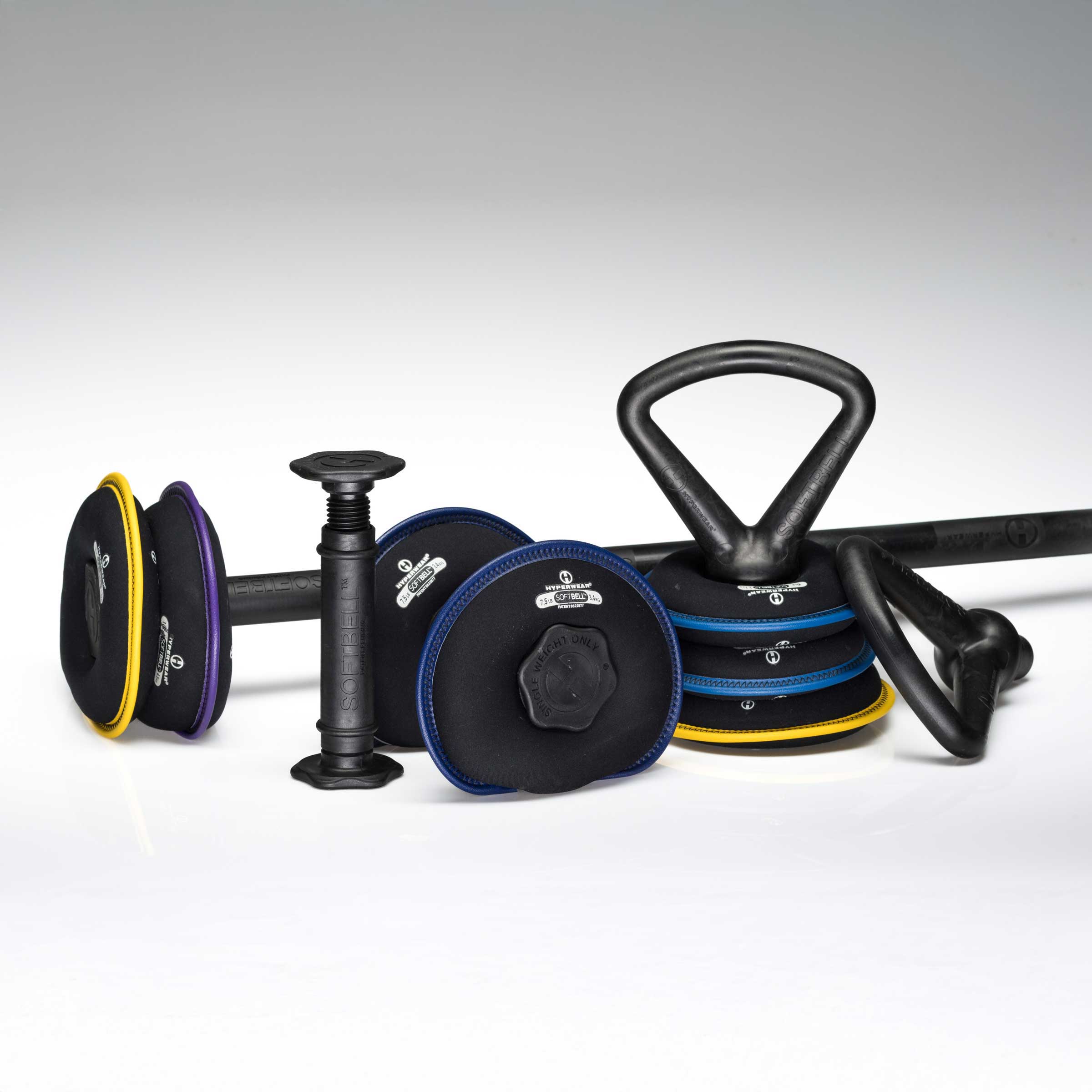
SandBells, SteelBells, and SoftBells are versatile for wall ball alternatives, carries, squats, presses, ground-to-shoulder movements, slams, and conditioning circuits. They are easy to integrate into home workouts and small-group training.
Weighted vests
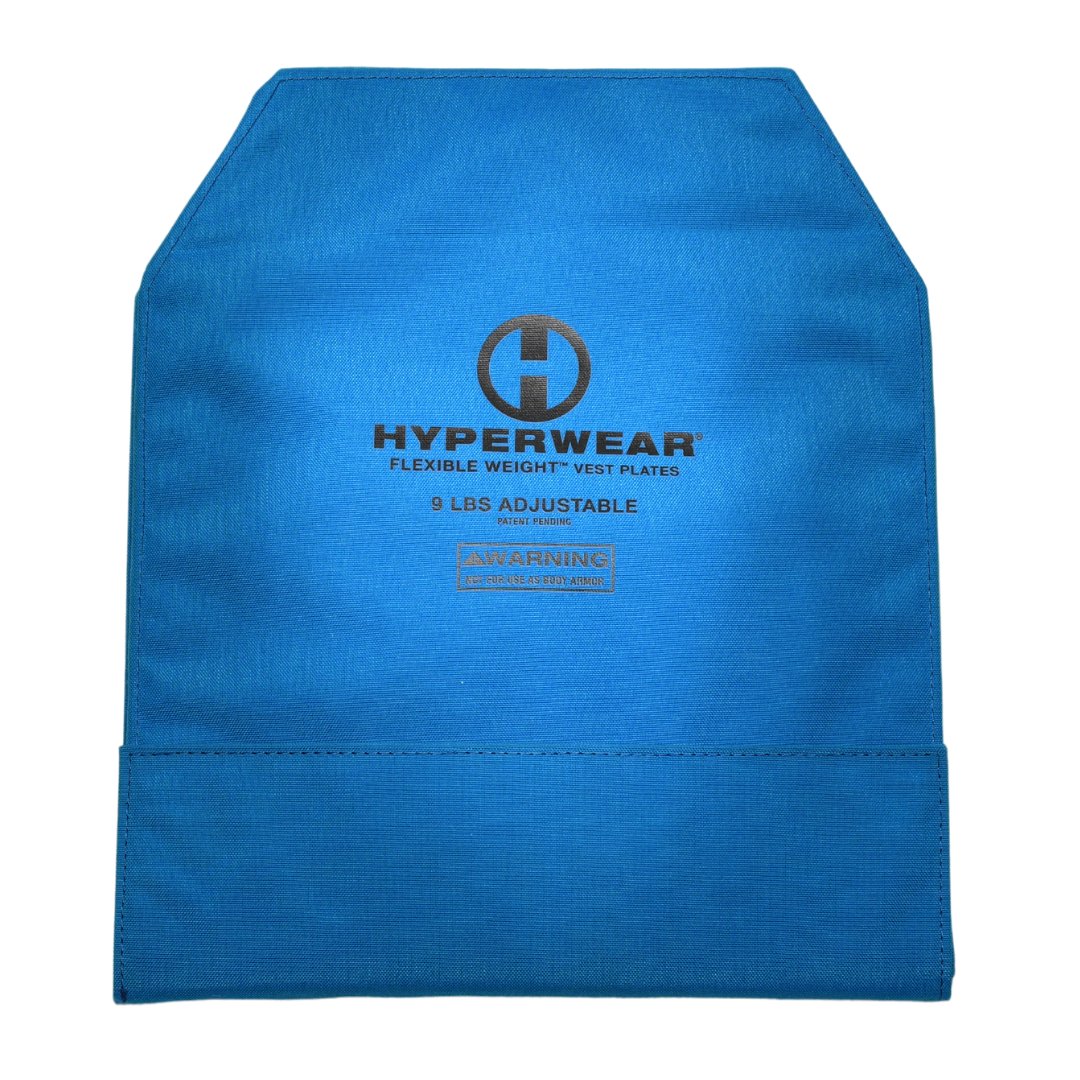
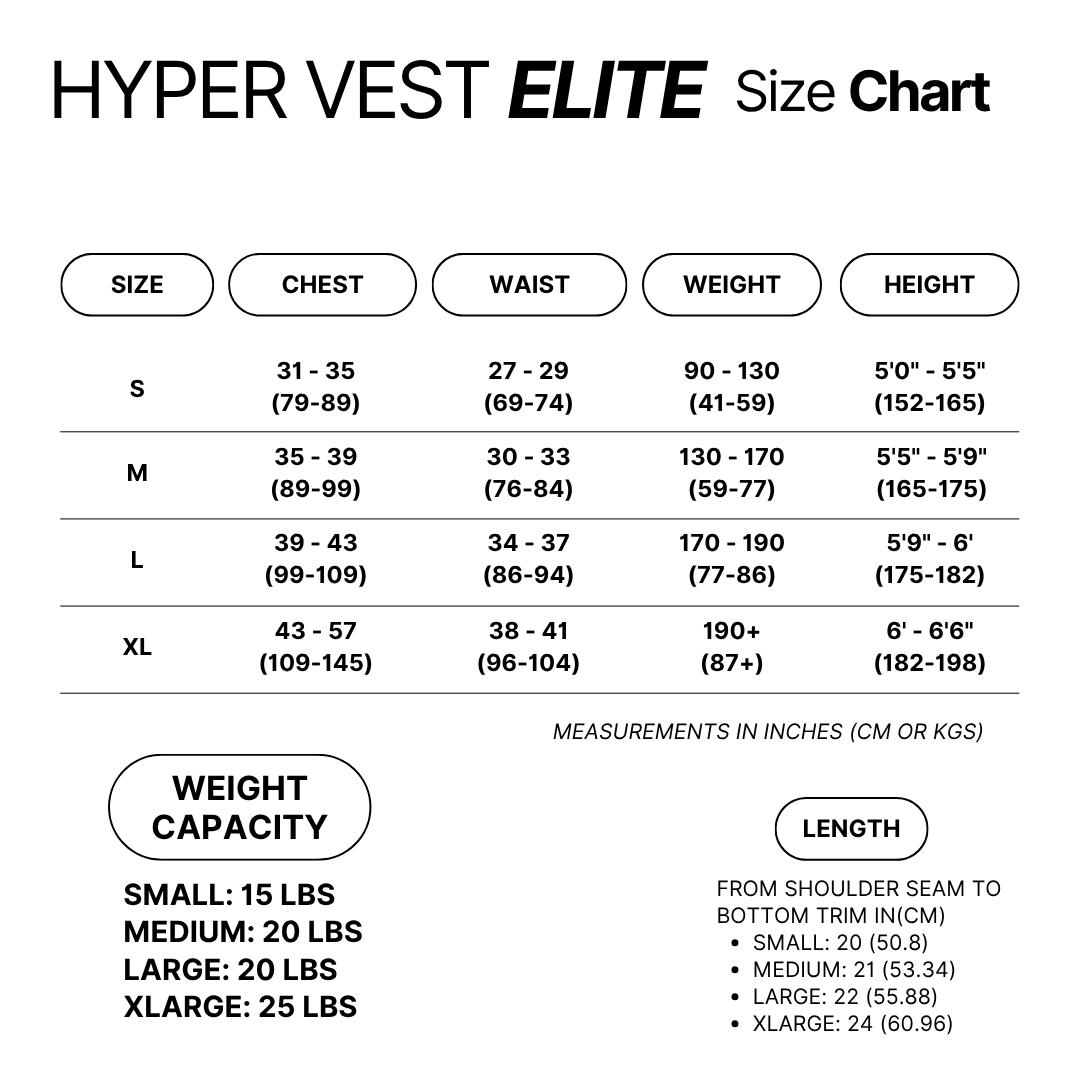
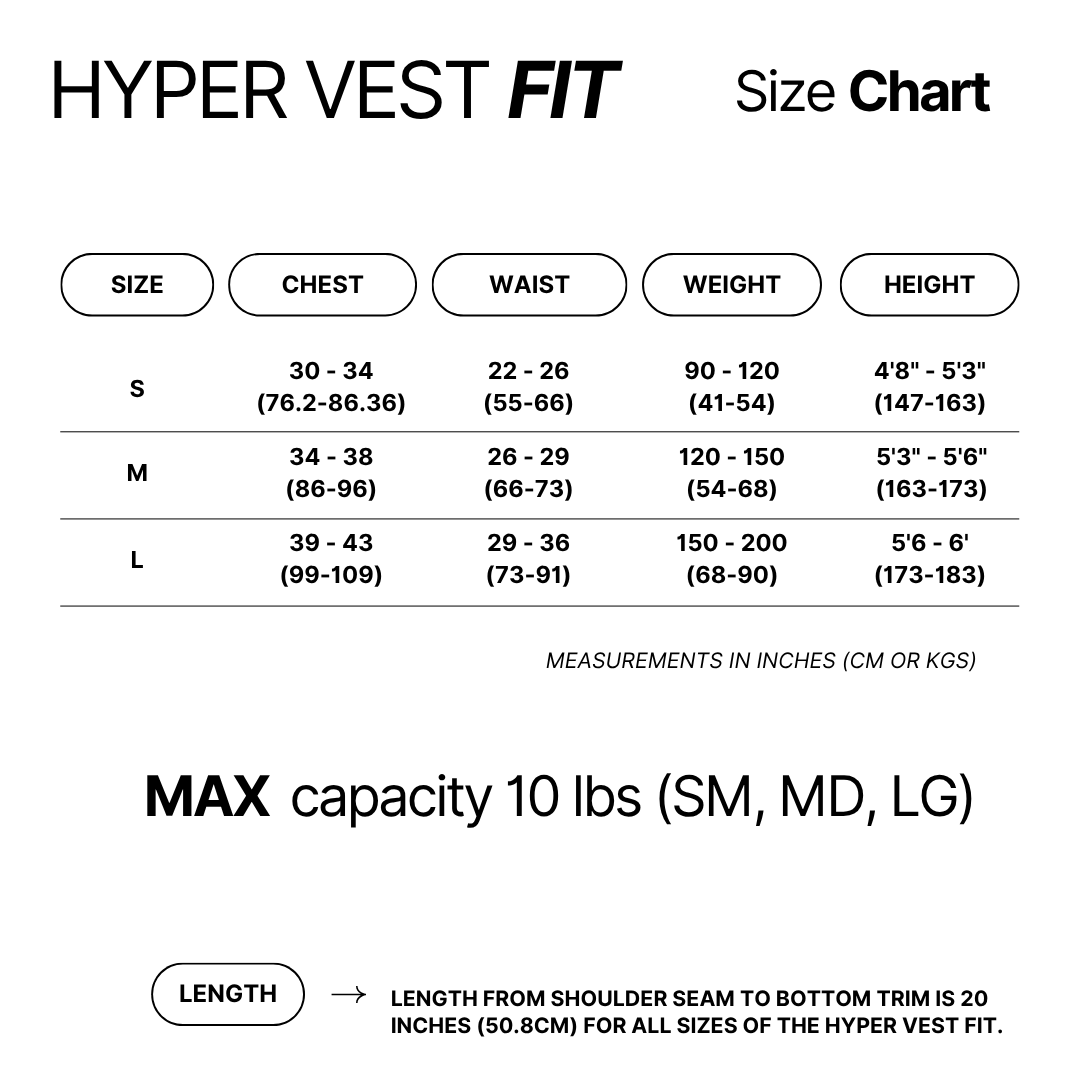
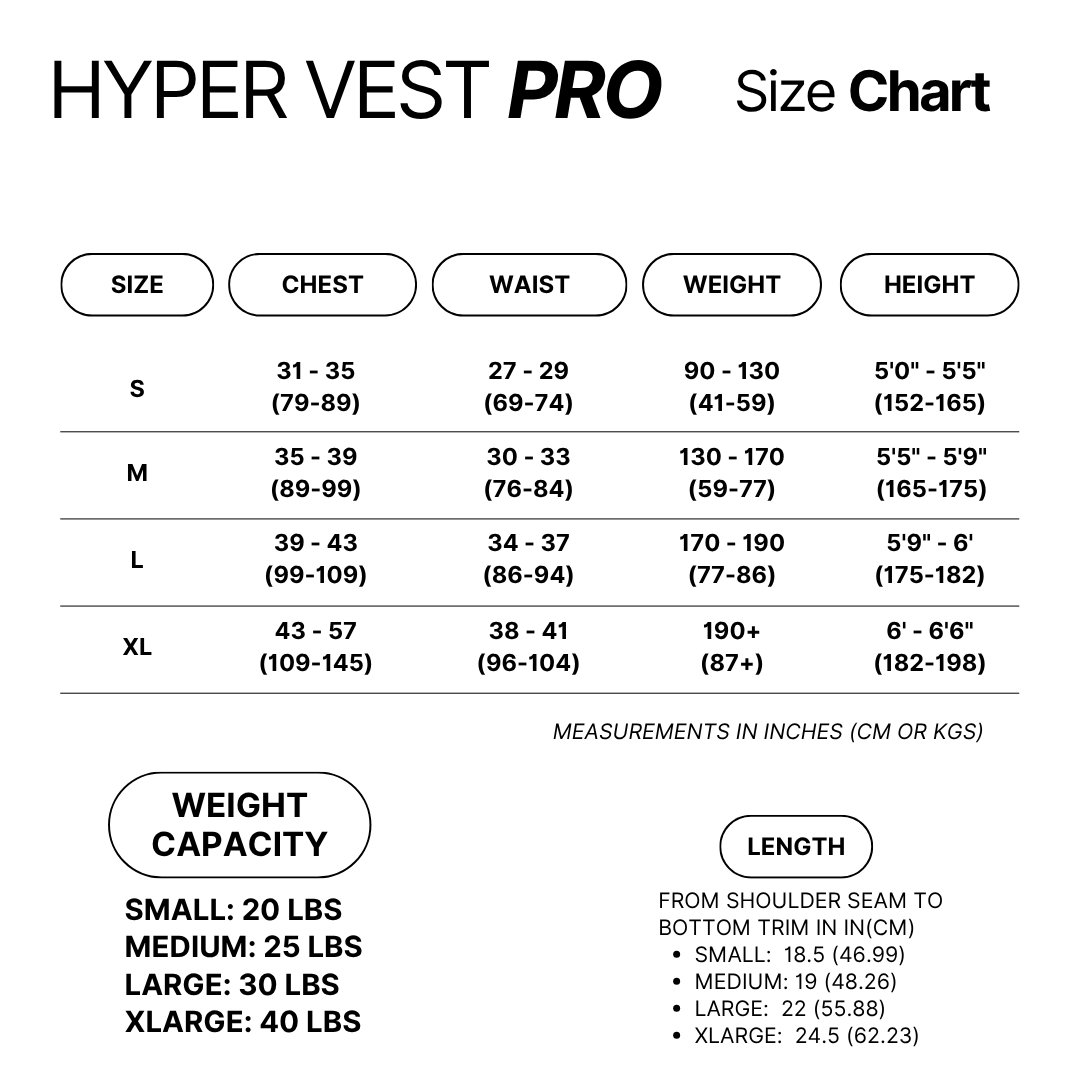
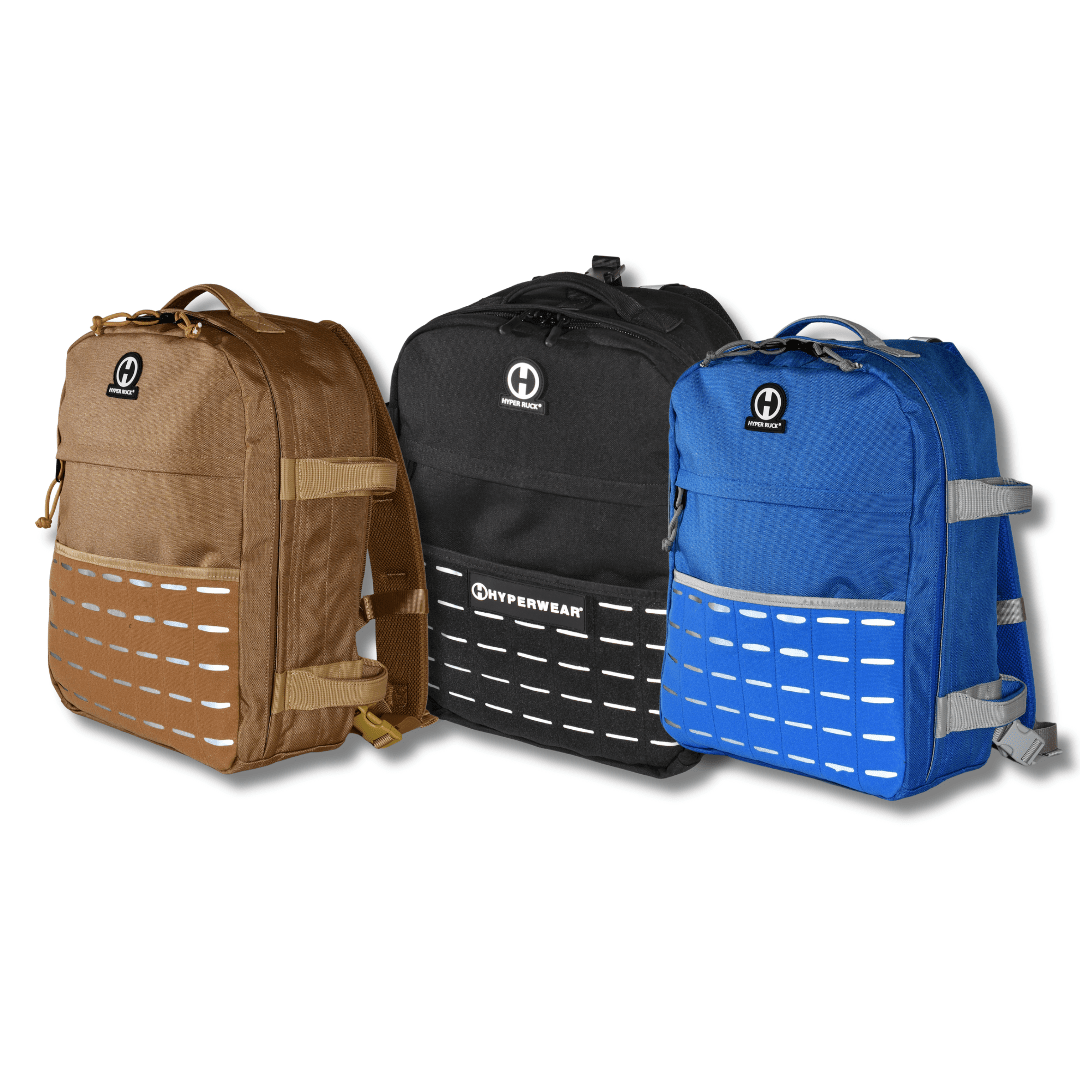
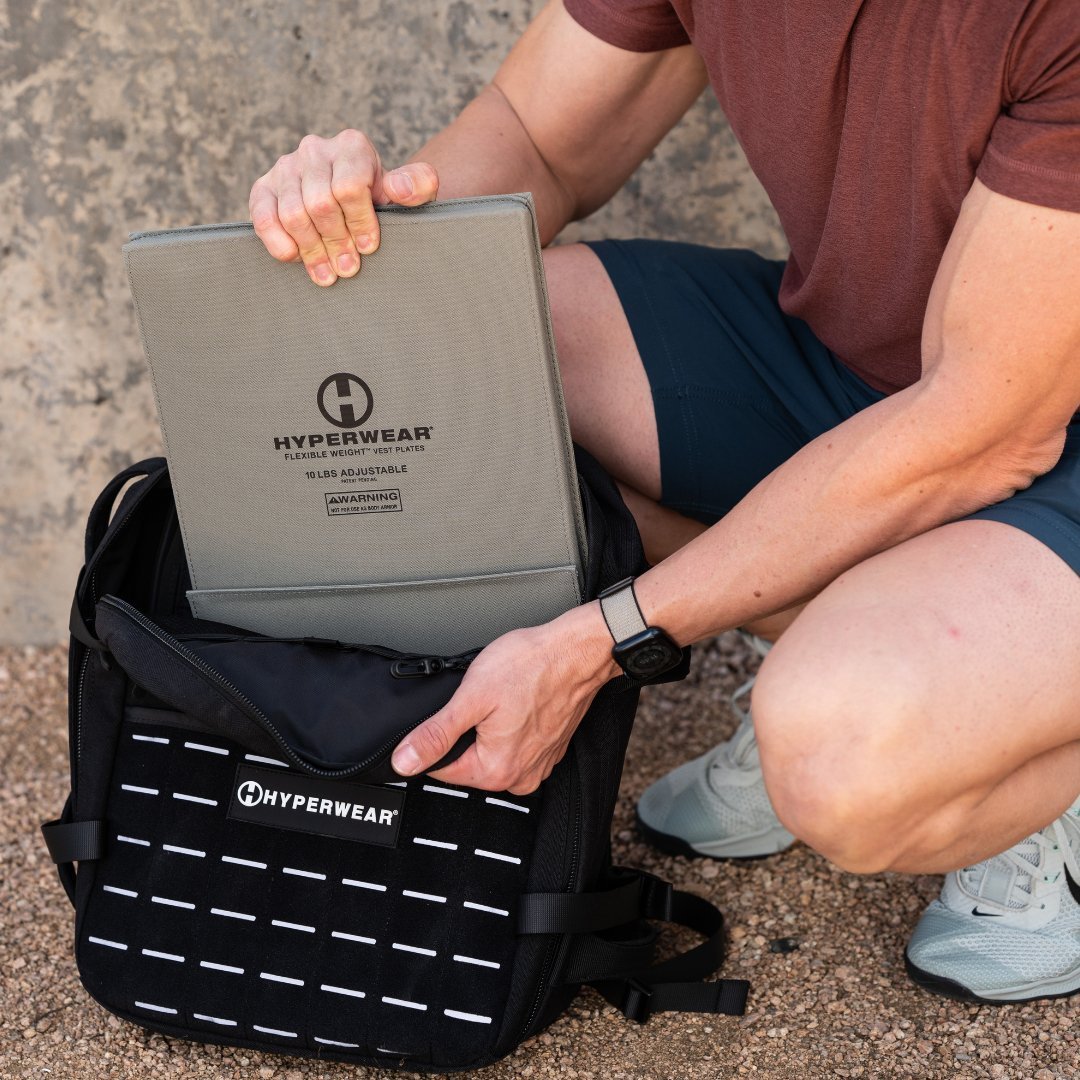
Weighted vests can help build running durability, hill power, walking strength, and general conditioning. Use them carefully and progressively. For HYROX-specific running, most of your quality race-pace work should still be performed unloaded so you can develop efficient pacing and foot speed.
For a complete gear-based plan, visit: Training for HYROX at Home with Hyperwear Equipment.
Sample Hybrid Race™ Training workouts for HYROX prep
These sample sessions are designed to build race-specific qualities without needing every official station.
Workout 1: Compromised running and sandbag lunges
- Run 400 m
- 20 m sandbag lunges
- Run 400 m
- 20 m sandbag lunges
- Rest 2–3 minutes
- Repeat for 3–5 rounds
Use the Hybrid Race™ Training Sandbag System and focus on stable shoulder position, clean steps, and controlled breathing.
Workout 2: Sled simulation circuit
- Run 500 m
- Heavy sandbag drag or pull for 20–30 m
- Heavy sandbag push or bear-hug carry for 20–30 m
- Rest 2 minutes
- Repeat for 4–6 rounds
This session helps develop the leg drive, bracing, grip, and recovery skills needed for the sled push and sled pull.
Workout 3: Grip and carry endurance
- Run 800 m
- Farmer’s carry for 100–200 m
- 20 walking lunges
- 20 wall ball or weighted squat-to-press reps
- Rest 3 minutes
- Repeat for 3–4 rounds
Keep the runs controlled. The goal is to practice moving efficiently after loaded stations, not to win every interval.
HYROX pacing tips for first-time athletes
The easiest mistake in HYROX is starting too hot. The race rewards consistency. A slightly slower first half can set you up for a stronger finish, while an aggressive start can make the sleds, lunges, and wall balls feel much harder than expected.
- Run the first kilometer under control. You should feel like you are holding back.
- Do not treat every station like a max effort. Smooth work beats panic work.
- Use the runs to reset. After hard stations, settle your breathing before trying to accelerate.
- Plan your breaks. Short planned breaks are usually better than unplanned failure.
- Practice transitions. Know how you will enter each station before race day.
For most athletes, the goal is not to be perfect at every station. The goal is to avoid major slowdowns. That means training repeatability, not just peak effort.
HYROX FAQ
What is HYROX?
HYROX is an indoor fitness race that combines 8 x 1 km runs with 8 functional workout stations. The stations are SkiErg, sled push, sled pull, burpee broad jumps, rowing, farmer’s carry, sandbag lunges, and wall balls.
What does a HYROX race consist of?
A standard HYROX race consists of 8 km of running and 8 workout stations. Athletes alternate between a 1 km run and one functional station until they finish all eight stations.
Is HYROX good for beginners?
Yes, HYROX can be approachable for beginners because the format is predictable and the Open, Doubles, and Relay options give athletes different ways to participate. Beginners should still train running, sled work, lunges, carries, and wall balls before race day.
How should I train for HYROX?
Train compromised running, not just separate strength and cardio. That means combining 400 m to 1 km run intervals with stations such as sled push, sled pull, farmer’s carries, sandbag lunges, wall balls, and rowing.
Why does the HYROX sled feel so hard?
The sled can feel harder because of surface friction, turf or carpet conditions, sled setup, shoe grip, and fatigue. Practice sled work on turf or carpet, test your shoes, and train with slightly more resistance if your gym sled moves easier than race-day conditions.
What sandbag weight is used for HYROX lunges?
Sandbag lunge weight depends on the division. Many standard race-prep loads center around 10 kg and 20 kg, while Pro divisions can be heavier. The Hybrid Race™ Training Sandbag System is available in 10 kg and 20 kg options for race-specific lunge practice.
Can I train for HYROX at home?
Yes. While access to a sled, SkiErg, or rower can help, you can still prepare many HYROX qualities at home with running intervals, sandbag lunges, loaded carries, resistance bands, weighted vests, SandBells, SteelBells, and workout sandbags. Start with our HYROX at-home training guide.
What gear helps with HYROX training?
Useful training tools include a race-specific sandbag for lunges, a heavier sandbag system for sled simulation and loaded carries, resistance bands, weighted vests, SandBells, SteelBells, and conditioning tools that let you combine running with functional strength.
Start your Hybrid Race™ Training
HYROX is simple to understand but demanding to complete. The race asks you to run well, move load efficiently, control your breathing, and stay composed when fatigue builds.
Whether you are preparing for your first Open race, racing Doubles with a partner, or chasing a faster time, your training should match the demands of the event. Build your engine. Practice compromised running. Train the sled push and pull. Own your sandbag lunges. Finish strong on wall balls.
To start training with race-specific gear, explore the Hybrid Race™ Training Sandbag System. For a complete station-by-station home training plan, read Training for HYROX at Home with Hyperwear Equipment.
HYROX® is a registered trademark of Upsolut Sports GmbH. This article is not affiliated with or endorsed by HYROX®. Hyperwear training suggestions are designed to help hybrid athletes prepare for hybrid fitness competitions.