



By Dirk Buikema | Founder of Hyperwear
Weighted vest training is an easy way to make walking, bodyweight exercise, running, rucking, and conditioning more effective by adding strength training to movement. The right vest adds load in a way that still feels natural, scalable, and repeatable. The right vest allows you to progressively load with adjustable weights, increase your wear time pain-free, and move freely.
For anyone looking at buying a weighted vest, the two most basic questions are simple: How heavy should a weighted vest be? and How long should I wear my weighted vest? This guide answers both in a practical way, using current Hyperwear product options and the best real-world context we have from research about using weighted vests. Much of our advice is informed by research on weighted vest use during weight loss, body composition change, and bone health that used Hyperwear weighted vests.
Quick answer
- How heavy should a weighted vest be? For most customers, start around 5% to 10% of body weight for walking or general training, then build gradually.
- How long should I wear my weighted vest? Start with 20 to 60 minutes for workouts. Longer wear can make sense at lighter loads if you are upright and moving, not just sitting in it. Very long wear during daily activity for roughly 6 to 7 hours has been studied in weight-loss research.
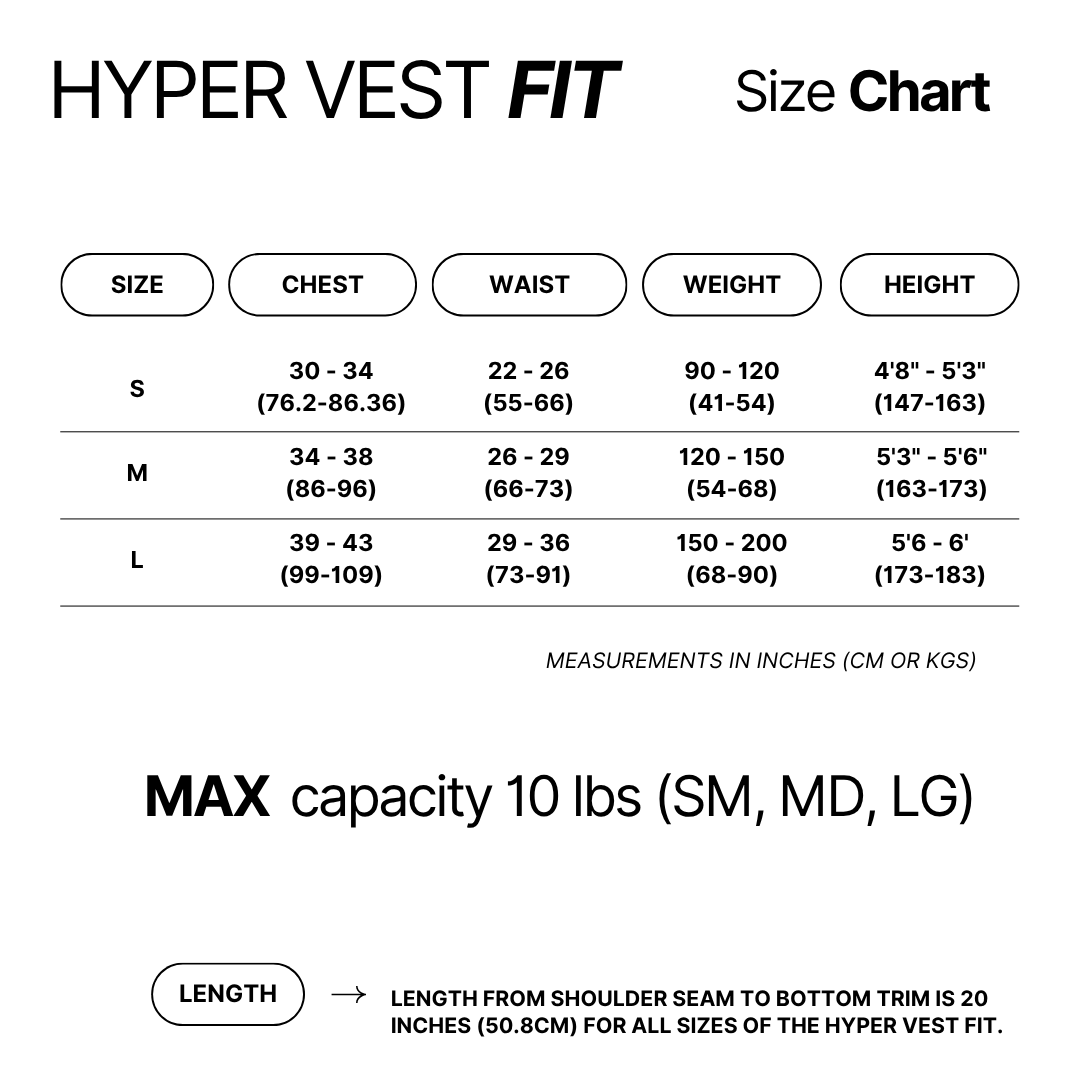
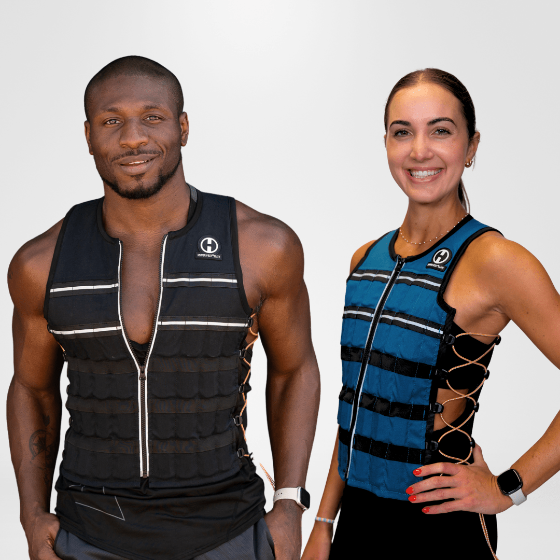
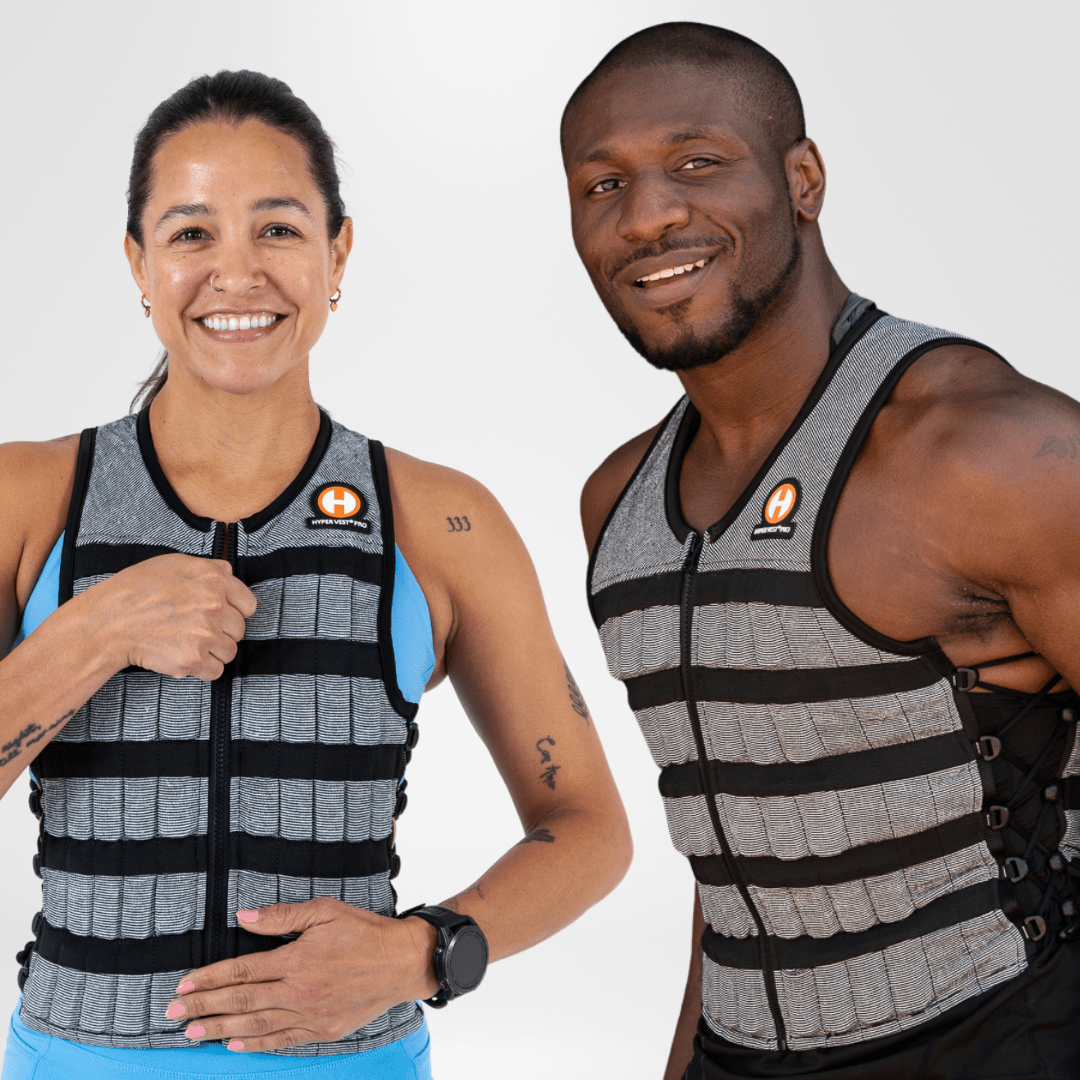
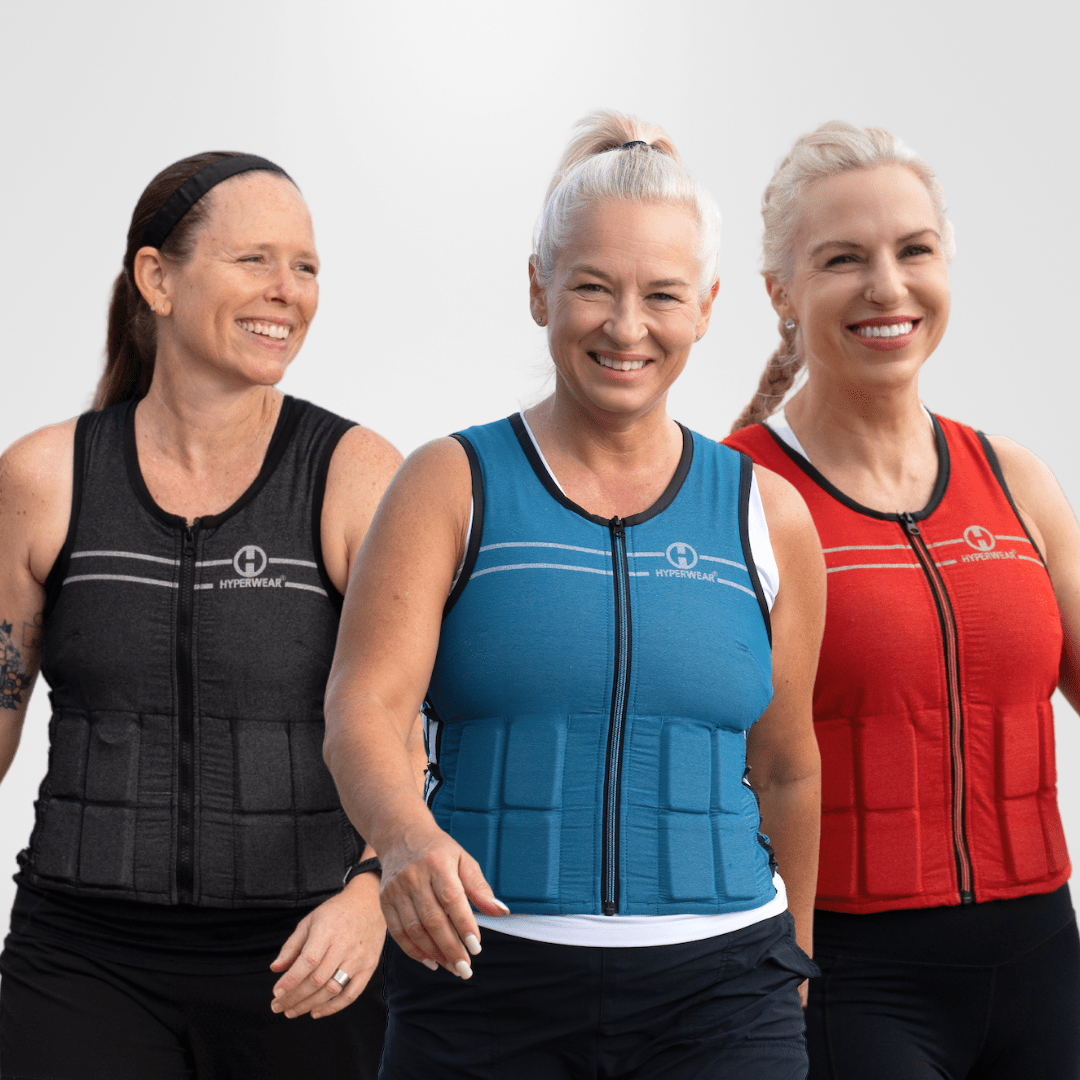
- Best vest by goal: Hyper Vest FIT for women with lighter loads and comfortable everyday wear, Hyper Vest PRO for the most versatile all-around use and heaviest loads, and Hyper Vest ELITE for higher-performance training with a thin load profile. All feature adjustable weights.
Why use a weighted vest?
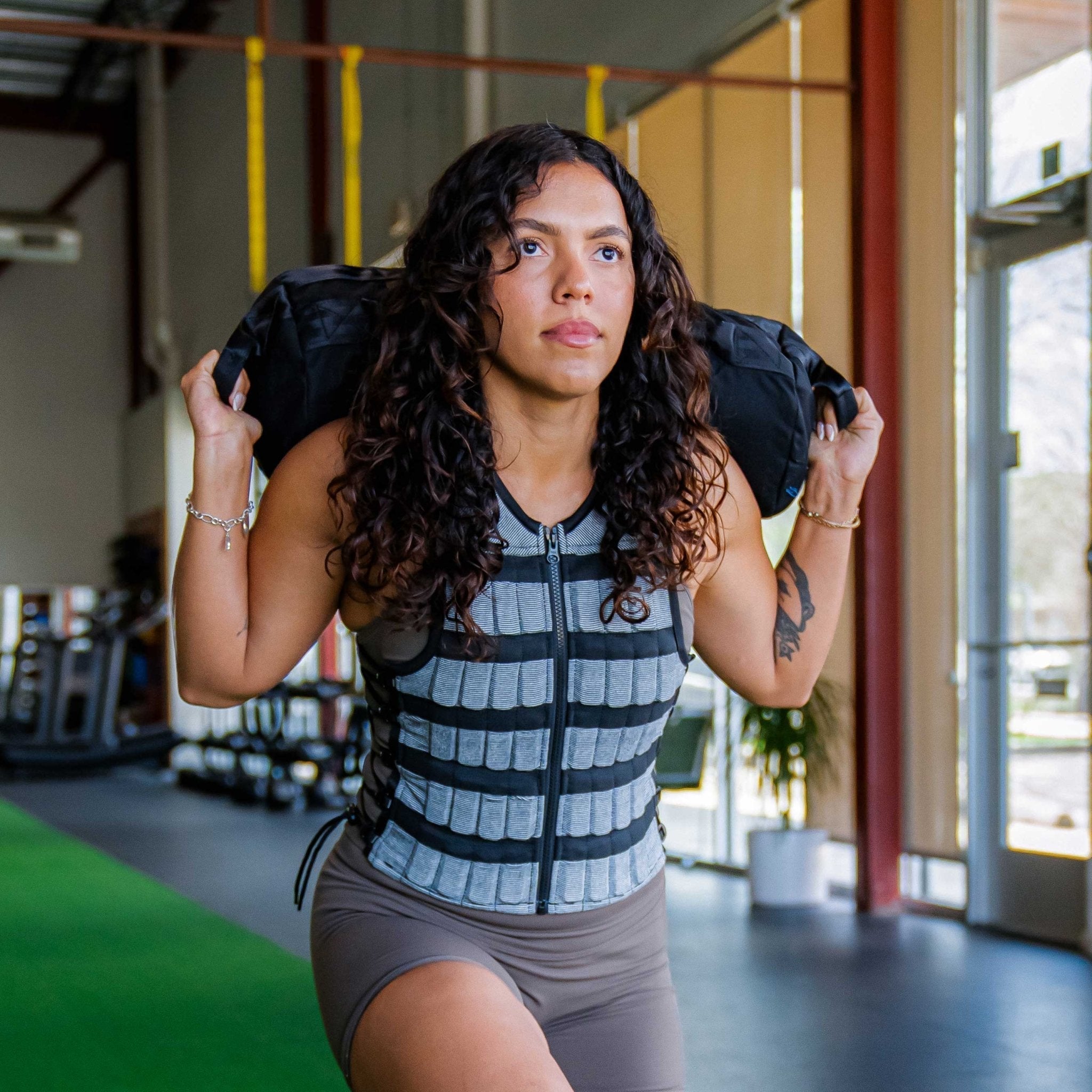
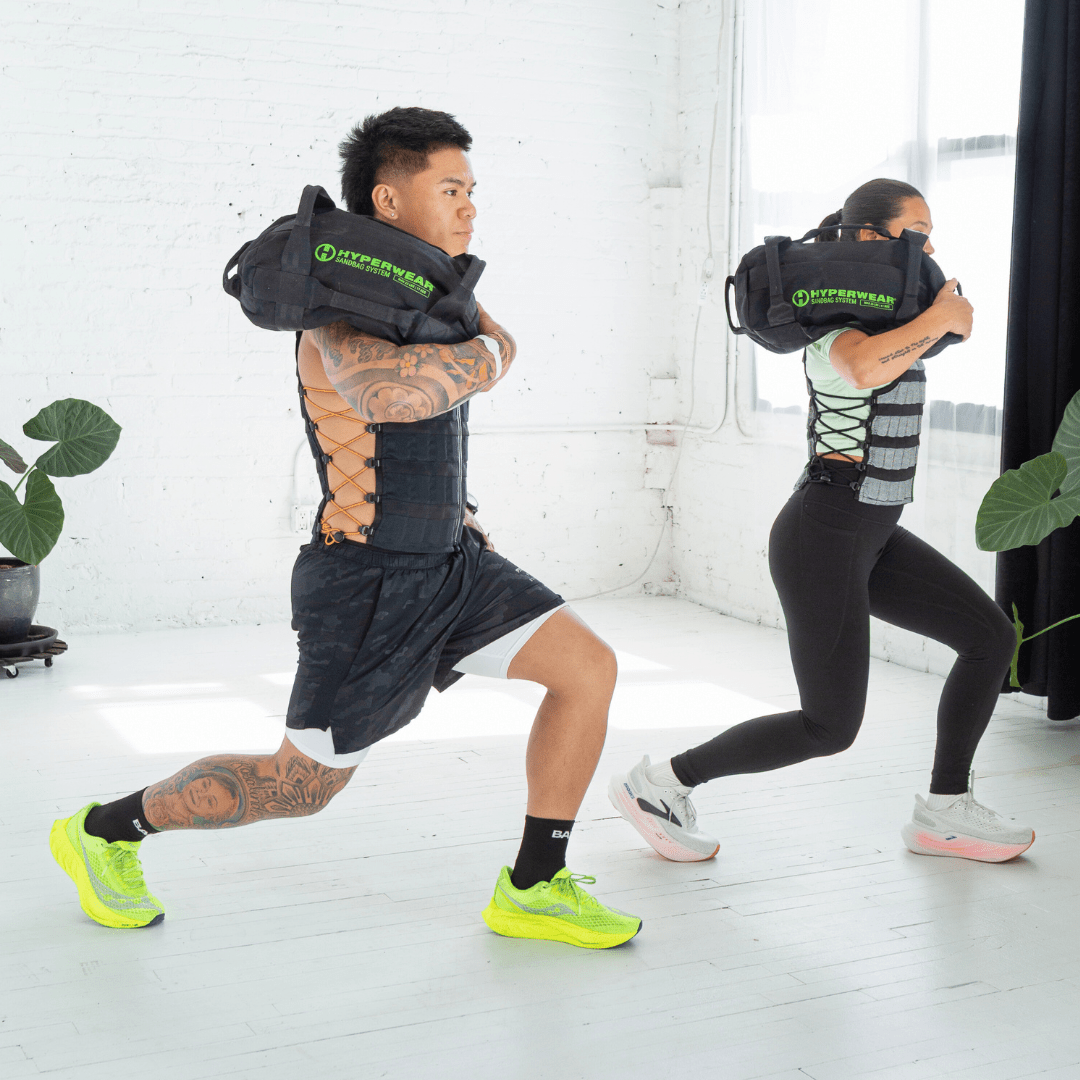
A weighted vest adds resistance to movement to engage muscles for strengthening, bones for loading, cardio for heart health, and calorie burn for metabolic health. It can be added to workouts like running, rucking, walking, step-ups, squats, lunges, stair work, bodyweight strength training, and short conditioning sessions.
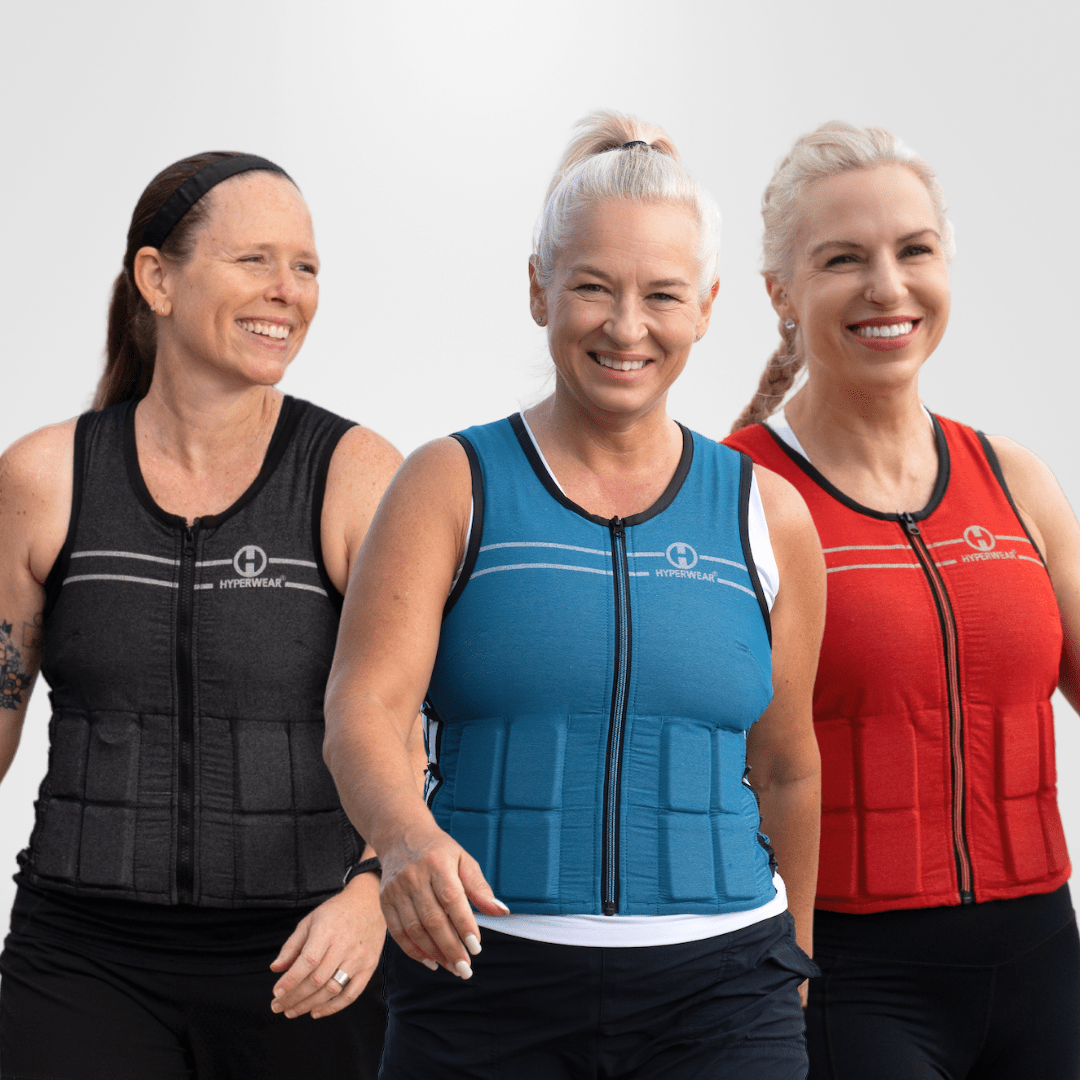
Unlike carrying dumbbells, a well-fitted vest keeps your hands free and distributes weight around your torso, which can make it easier to move naturally. The goal is not to make every workout intense. The goal is to add just enough load for enough time to reach your goal. An adjustable, well-designed, well-fitted vest increases the demand on your body while helping keep your movement, gait, balance, and posture normal.
What research by Wake Forest University suggests
Customers often ask two practical questions before they start: How heavy should a weighted vest be? and How long should I wear it? There is not one perfect answer for everyone, but there is useful guidance from a series of Wake Forest University studies on weighted vest use during intentional weight loss in older adults.
These studies are especially relevant because they looked at real daily wear, not just short gym sessions. They also matter to Hyperwear because participants in the weighted-vest group used an appropriately sized Hyper Vest PRO. The pilot paper reports Hyper Vest PRO by name and does not report Hyperwear funding or donated vest product.
Bottom line: the Wake Forest research supports gradual progression, lighter load for longer active wear, and using the vest during the most active part of the day. It does not support overselling a weighted vest as a stand-alone bone-health fix.
In the Wake Forest pilot, older adults living with obesity and osteoarthritis followed a calorie-restriction program, and the weighted-vest group wore a Hyper Vest PRO during the most active part of the day. Participants were asked to work up toward wearing the vest for up to 10 hours per day, with a goal of at least 50% of awake time, and the vest weight was increased weekly to replace lost body weight up to a maximum of 15% of baseline body weight. Average wear time in the pilot was about 6.6 hours per day. This was a small pilot, so it should be reviewed carefully, but it suggested two promising signals: less long-term weight regain and less reduction in resting metabolic rate compared with the diet-only group. View the Nature paper.
The larger Wake Forest study was the 12-month INVEST randomized clinical trial. In that study, the weighted-vest protocol targeted 8 hours per day during the most active part of the day. Participants averaged about 7.1 hours per day of wear time and replaced about 78% of lost weight in the vest. The key reality check is that this larger trial did not show that weighted-vest use prevented hip bone loss during weight loss. That is important context: the studies support weighted vests as a useful loading tool, but not as a magic solution on their own. Read the JAMA Network Open trial.
A newer 2026 secondary analysis from the same Wake Forest research program adds an important nuance: among people in the weighted-vest group, more time spent upright was associated with more favorable hip bone outcomes. In plain English, a weighted vest likely makes the most sense when you are standing, stepping, walking, or otherwise moving, not just wearing it passively while sedentary. See Wake Forest’s summary, Wearing a weighted vest to strengthen bones? Make sure you’re moving.
How heavy should a weighted vest be?
The simplest customer-facing answer is this: start lighter than you think and build only after your movement looks and feels normal.
| Goal | Good starting point | What to watch for |
|---|---|---|
| Beginner walking / daily activity | 5% to 8% of body weight | You should still walk tall, breathe normally, and keep a natural stride. |
| Fitness walking / fat-loss walking | 8% to 12% of body weight | Do not increase load if the vest changes your gait or makes walking feel clumsy. |
| Strength circuits / squats / step-ups | 5% to 10% to start | Only go heavier after you can move cleanly at lower loads. |
| Running / HIIT / faster intervals | 5% to 10% | Keep loads lighter for faster movement and less bounce. |
| Longer active wear during a fat-loss phase | Start unloaded or very light, then progress gradually | In the Wake Forest research, load was increased gradually and capped by study protocol rather than jumping heavy on day one. |
If you want one practical rule that works for most customers, use this: 5% to 10% of body weight is the safest place to start for walking and general weighted vest training.
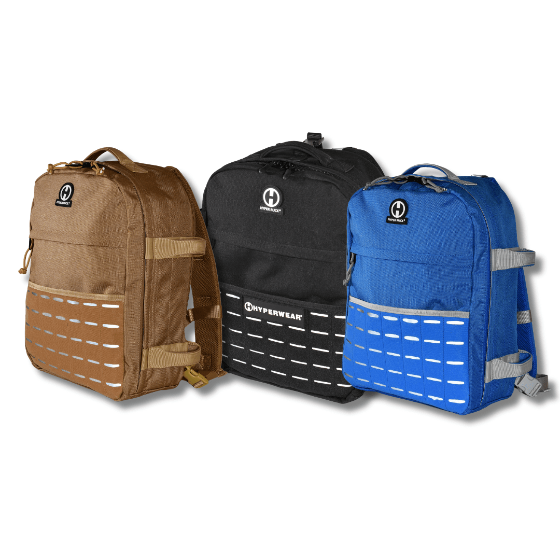
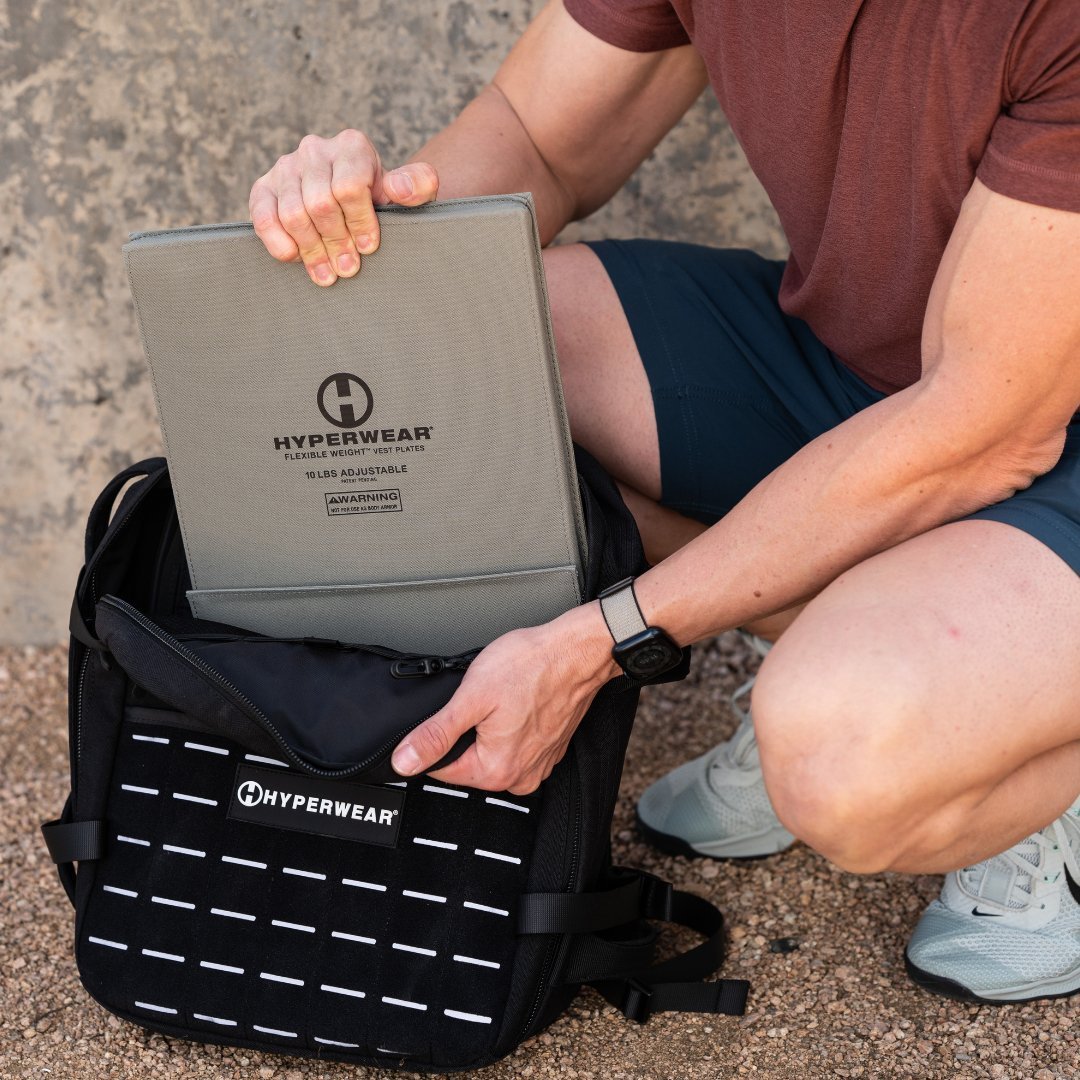
If your vest causes you to hunch, shorten your stride, over-tense your neck, or lose control of your breathing, it is too heavy for that use case. As a general rule, you will usually not want to exceed 15% of body weight in a weighted vest. Consider a rucking backpack for very heavy weighted walking and the benefits of rucking outdoors.
How long should I wear my weighted vest?
For most customers, the right answer depends on whether the vest is being used for a workout, for lighter active wear, or for the longer wear times that have been studied in body-composition and metabolism research.
| Use case | Good starting duration | Build toward |
|---|---|---|
| First weighted vest walk | 20 to 30 minutes | 30 to 45 minutes if posture and breathing stay clean |
| Bodyweight or strength circuit | 20 to 30 minutes | 30 to 60 minutes depending on load and training level |
| Cardio or interval session | 10 to 25 minutes | Keep the session shorter and the load lighter for faster work |
| Light active wear | 30 to 90 minutes | Longer blocks can make sense if the load is light and you are upright and moving |
The Wake Forest studies show that longer wear is possible in a research setting, but that is not the same as telling every customer to wear a heavy vest all day. In the real world, the better recommendation is: start with shorter sessions, use a light-to-moderate load, and make sure the time is active time. Consult your medical professional before trying the very long wear times that were studied.
If a customer asks, “Can I wear my weighted vest all day?” the most honest answer is: sometimes, at a light load, if you are upright and active — but it should not feel like a painful challenge. It is always smart to increase weighted vest load gradually and in small increments.
Which Hyper Vest is right for your goal?
Hyper Vest FIT
Best for: women, lighter everyday strength use, walking, light running, bone-loading routines, and beginner-friendly strength or cardio.
Why choose it: Hyper Vest FIT is designed specifically for women and adjusts up to 10 pounds, making it a strong option for lighter loading, shorter workouts, and all-day comfort at modest weights.
Hyper Vest PRO
Best for: versatile all-around training, walking, rucking, cardio, bodyweight strength, and longer active wear.
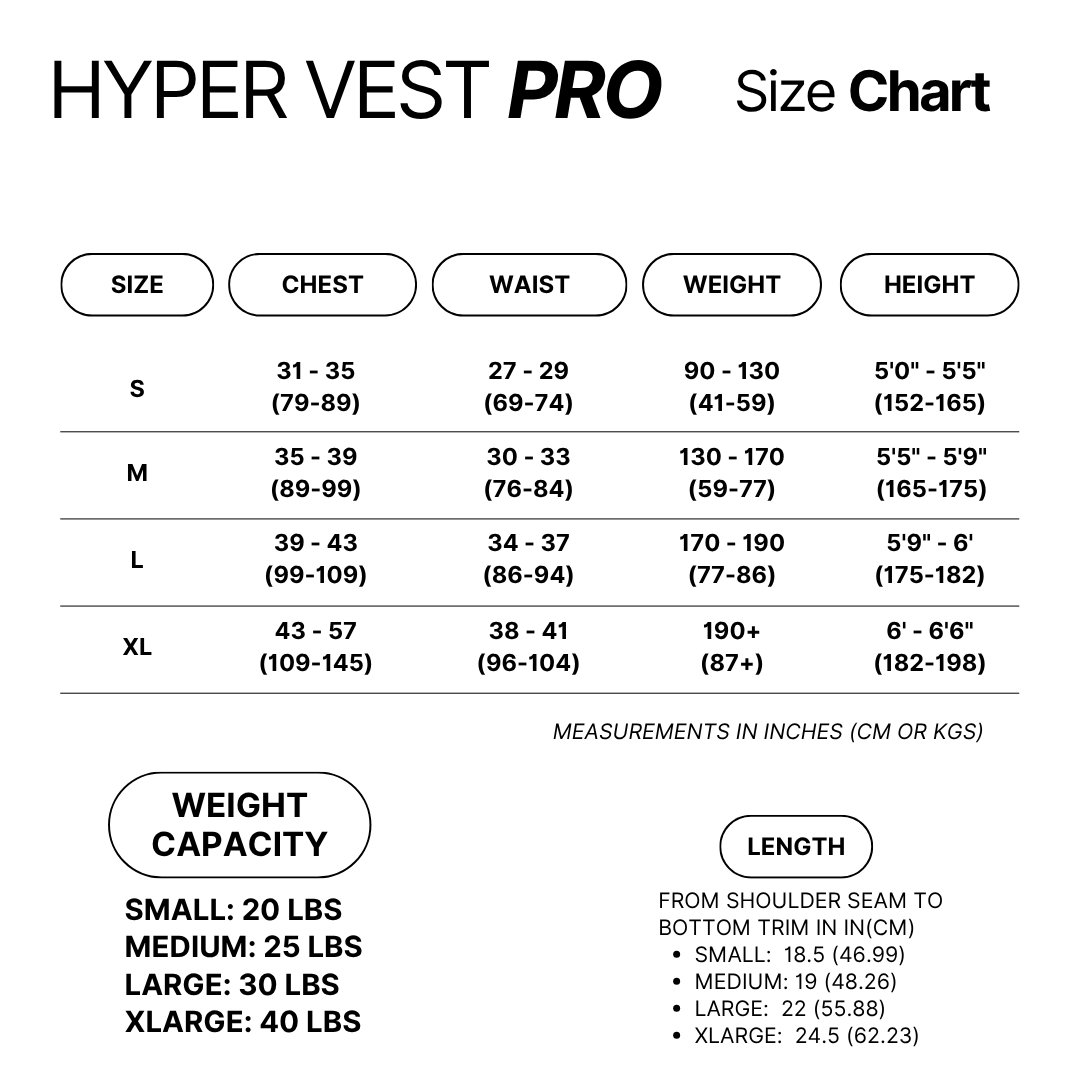
Why choose it: Hyper Vest PRO is the most natural fit for this guide and is the model specifically identified in the Wake Forest pilot study due to its comfort, adjustability, and higher load capacity.
Hyper Vest ELITE
Best for: higher-performance training, thinner fit, faster sessions, running, and HIIT.
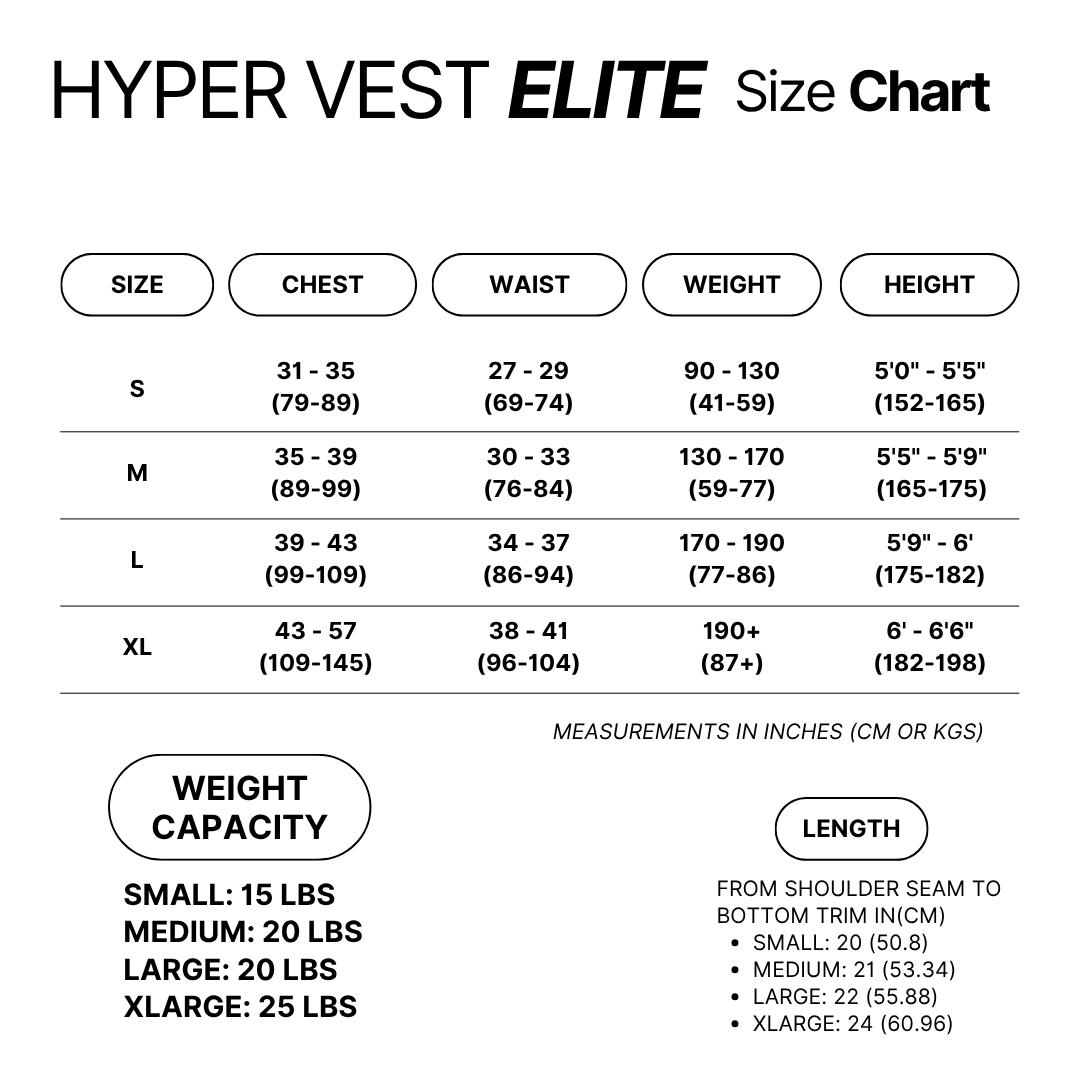
Why choose it: Hyper Vest ELITE is the better choice for customers who want a thinner, more performance-oriented vest and are training in faster or more demanding athletic ways. It is available in different weight configurations depending on size.
Still unsure which one fits your goal? Read our weighted vest selector guide.
3 weighted vest workouts to start with
1) Beginner weighted vest walk + bodyweight circuit
Best for: beginners, walking, active recovery, and getting used to the vest
- 10-minute brisk walk
- 10 bodyweight squats
- 8 reverse lunges per side
- 10 step-ups per side
- 20-second plank
- Repeat 2 to 3 rounds
2) Weighted vest strength circuit
Best for: bodyweight strength and conditioning
- 12 squats
- 10 push-ups
- 10 split squats per side
- 12 step-ups per side
- 20 alternating shoulder taps in plank
- Rest 60 seconds and repeat for 3 to 4 rounds
3) Short interval workout
Best for: cardio, stamina, and short sessions
- 30 seconds fast walk, stair climb, or treadmill incline
- 30 seconds squats
- 30 seconds step-ups
- 30 seconds recovery walk
- Repeat 4 to 6 rounds
Progression rule: increase only one variable at a time — weight, duration, or intensity. Do not increase all three at once.
Form and safety notes
- Start lighter than you think you need.
- Make sure the vest sits securely and does not bounce or ride up.
- Use lighter loads for faster movement and longer wear.
- Use your posture and breathing as feedback. If either falls apart, reduce the load.
- If you have joint pain, neck or back issues, balance concerns, or a medical condition, start cautiously and ask your clinician if needed.
FAQ
How heavy should a weighted vest be?
For most customers, start with 5% to 10% of body weight for walking or general training. Use the lower end if you are new, returning from time off, or want longer active wear.
How long should I wear my weighted vest?
For workouts, start with 20 to 60 minutes depending on the load and the session type. Longer wear can work at lighter loads if you are upright and moving rather than sitting in it.
Is Hyper Vest PRO the model used in the Wake Forest pilot study?
Yes. The 2025 Wake Forest pilot participants in the weighted-vest group received an appropriately sized Hyper Vest PRO.
Can I wear my weighted vest all day?
Some people can tolerate longer active wear at light loads, but it should not feel like a brute-force challenge. Start shorter, stay comfortable, and make sure the time is active time.
Which weighted vest is best for women?
Hyper Vest FIT is the best first stop for most women who want comfort, adjustability, walking support, and lighter everyday training. There are no weights over the breast area. If you want a higher-capacity vest and are comfortable in compression fabrics, the unisex Hyper Vest PRO and Hyper Vest ELITE are better choices.
Which weighted vest is best for faster training or HIIT?
Hyper Vest ELITE is the better match for thinner, higher-performance training and faster movement.
Shop the right vest for your goal
Shop Hyper Vest FIT
Shop Hyper Vest PRO
Shop Hyper Vest ELITE
Read next
- How Heavy Should a Weighted Vest Be?
- What Weighted Vest Is Right for You?
- Explore the Hyperwear Training Hub
About the author: Dirk Buikema is the founder of Hyperwear and an innovator in functional training equipment, weighted vest systems, and performance gear.