


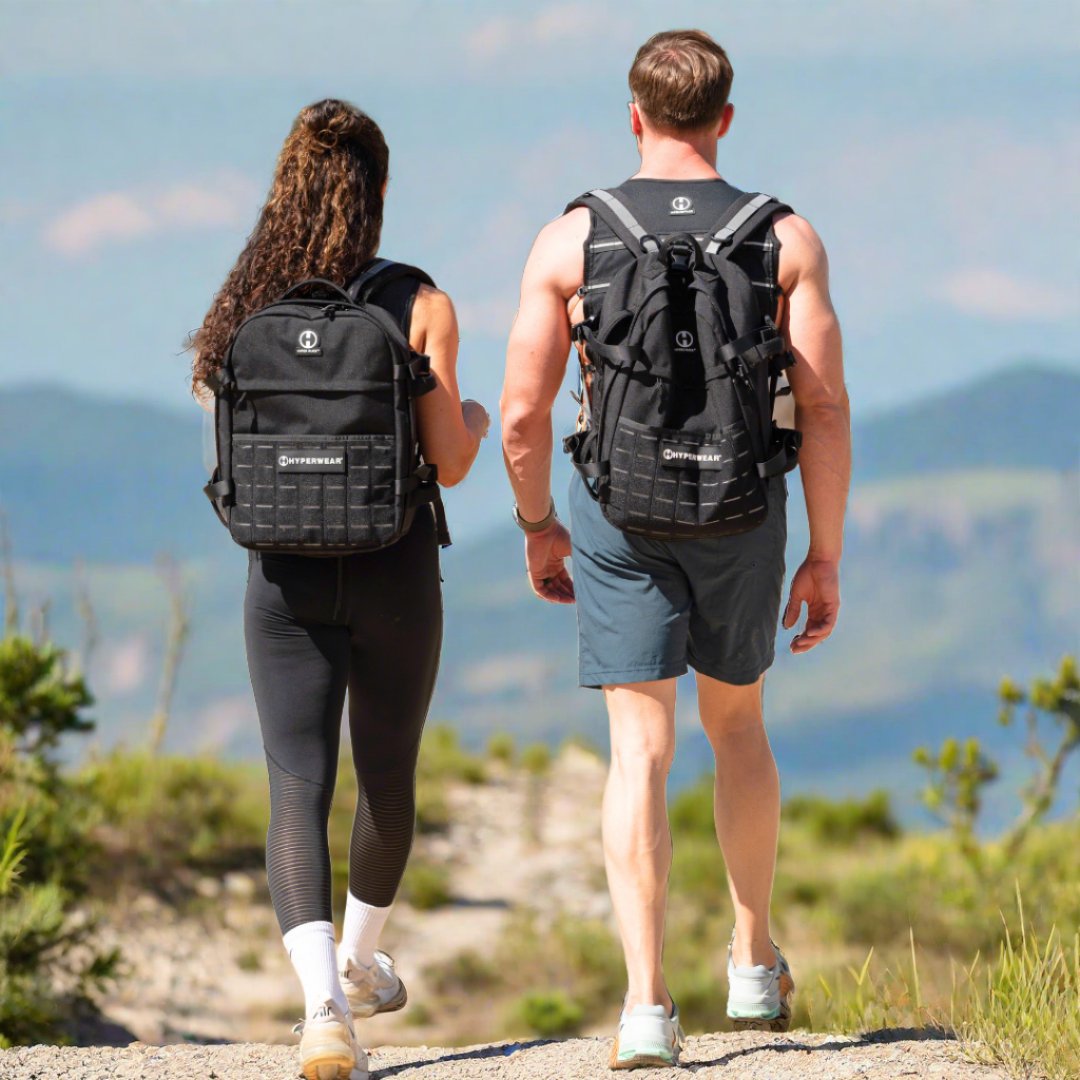


Quick answer: Most beginners should start with a weighted vest around 5% of body weight, especially for walking. Active users may gradually work toward 10% of body weight if posture, stride, breathing, and joint comfort stay normal. Strength and advanced conditioning can use heavier loads, but only after your body adapts.
For walking, UCLA Health recommends starting with a vest around 5% of body weight. Harvard Health suggests a vest around 10% of body weight, at least for starters. The right answer depends on your goal: walking, weight loss, running, strength training, rucking, bone-loading, or daily fitness.
Shop adjustable weighted vests
Weighted vest weight chart by goal
Use this chart as the starting point. When in doubt, choose the lighter option and add time or distance before adding more weight.
| Goal | Suggested starting load | Progression target | Best internal guide |
|---|---|---|---|
| Beginner walking | About 5% of body weight | 5–10% after several comfortable weeks | Weighted vest for walking |
| Walking for weight loss | 5% of body weight | 8–12% only after adaptation | Calorie calculator |
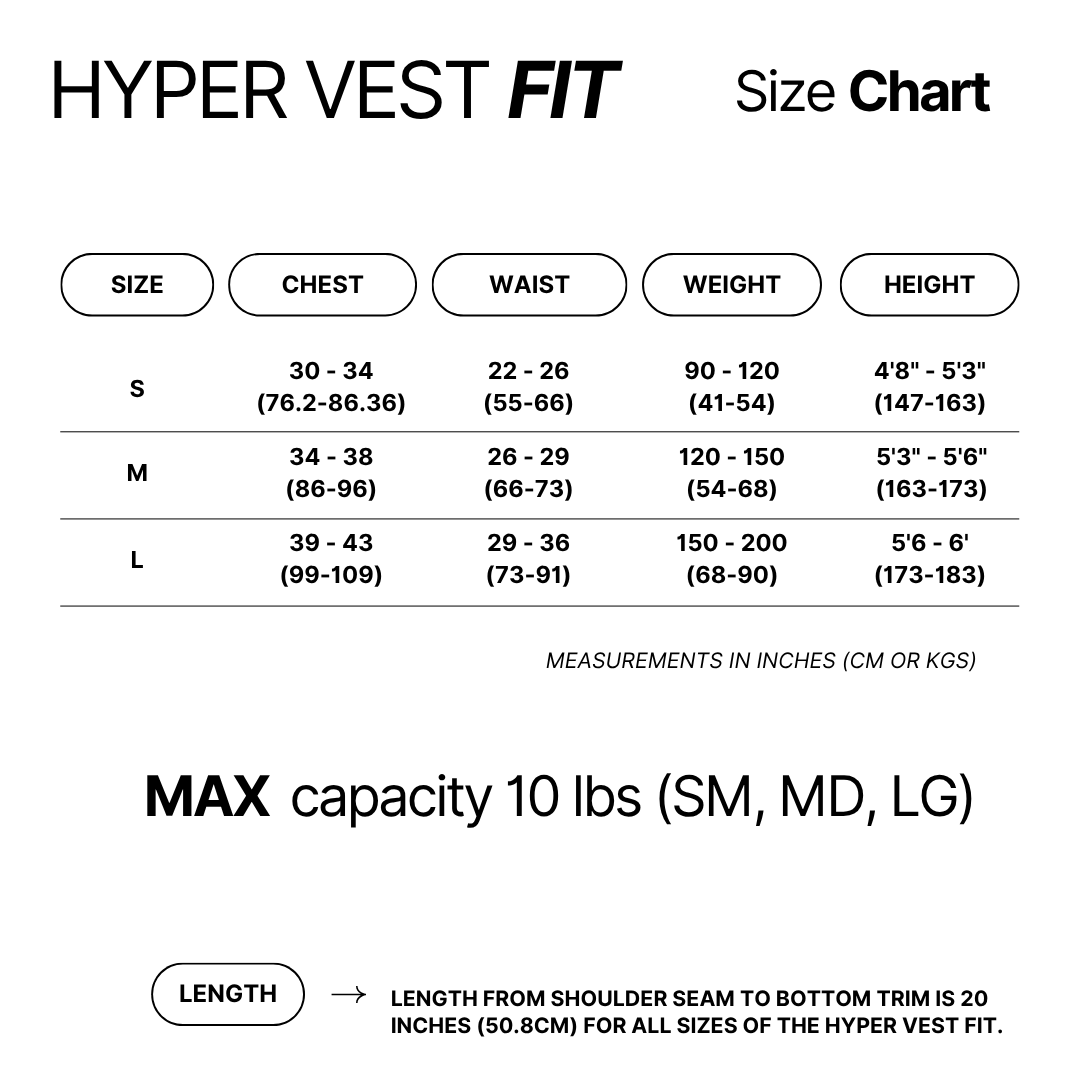
| Women’s daily walking and wellness | 3–5 lb or about 5% of body weight | Gradual 1/2-lb increases | Hyper Vest FIT |
| Running or run-walk training | 5% of body weight or less | 5–10% for trained users only | Hyper Vest ELITE |
| Strength and bodyweight training | 5–10% of body weight | 10–20% for advanced users | Hyper Vest PRO |
| Rucking-style walking | 5–10% of body weight | 10%+ only with gradual progression | Weighted vest and rucking calculator |
| Bone-loading or osteoporosis/osteopenia concerns | Very light, clinician-guided start | Progress only with medical or qualified coaching guidance | Weighted vest benefits |
Weighted vest weight chart by body weight
This chart gives practical starting ranges. The 5% column is the best starting point for most walkers. The 10% column is a common upper starter range for active users. The 15% and 20% columns are better reserved for strength training, rucking-style progression, or advanced conditioning—not beginner walking or running.
| Body weight | 5% start | 10% upper starter | 15% advanced | 20% strength/advanced |
|---|---|---|---|---|
| 100 lb | 5 lb | 10 lb | 15 lb | 20 lb |
| 125 lb | 6 lb | 12 lb | 19 lb | 25 lb |
| 150 lb | 7.5 lb | 15 lb | 22.5 lb | 30 lb |
| 175 lb | 9 lb | 17.5 lb | 26 lb | 35 lb |
| 200 lb | 10 lb | 20 lb | 30 lb | 40 lb |
| 225 lb | 11 lb | 22.5 lb | 34 lb | 45 lb |
| 250 lb | 12.5 lb | 25 lb | 37.5 lb | 50 lb |
Rule of thumb: use the lightest vest that makes the workout more challenging without changing your movement. If the vest changes your stride, posture, breathing, or joint comfort, it is too heavy for that activity right now.
How heavy should a weighted vest be for walking?
For walking, start around 5% of body weight. If you weigh 150 lb, that is about 7.5 lb. If you weigh 200 lb, that is about 10 lb. UCLA Health recommends this 5% starting point and emphasizes gradual progression.
Once you can walk comfortably with the vest, progress in this order:
- Add walking time.
- Add distance.
- Add pace.
- Add gentle hills.
- Add small amounts of weight.
Do not increase weight, speed, and hills in the same week. That makes it harder to know what caused soreness or pain.
Read the full weighted vest for walking guide
How heavy should a weighted vest be for weight loss?
For weight loss, the best vest weight is not the heaviest vest you can tolerate. It is the heaviest vest you can use while keeping your walking or workout routine consistent, comfortable, and repeatable.
Start with about 5% of body weight. After several weeks, many active users can progress toward 8–12% for weighted walking if gait, posture, knees, hips, back, and neck feel good. A heavier vest may increase calorie burn, but it can also shorten the workout, reduce movement quality, or increase overuse risk.
A 2024 study in Medicine & Science in Sports & Exercise developed and validated a model for estimating metabolic cost while walking with weighted vests, supporting the idea that vest-borne load meaningfully changes walking energy demand. For your own session, use Hyperwear’s calculator.
Calculate weighted vest walking calories
How heavy should a weighted vest be for running?
Running requires more caution than walking because each step already creates more impact. Most runners should start with 5% of body weight or less, and many beginners should avoid running in a vest until they have already adapted to weighted walking.
For running, a vest should be light, close-fitting, and low-bounce. If the vest shifts, restricts breathing, changes arm swing, or alters your stride, it is too heavy or not fitted correctly. Add load only after your easy runs and run-walk sessions feel normal.
Shop Hyper Vest ELITE for running and high-intensity training
How heavy should a weighted vest be for strength training?
Strength training can usually handle more vest weight than walking or running because the movements are slower and easier to control. A good starting range is 5–10% of body weight. Advanced users may work toward 10–20% for squats, lunges, push-ups, step-ups, pull-ups, and loaded circuits.
The key test is form. If the vest makes you cut range of motion, arch your back, collapse your knees, or lose control, reduce the weight. Load should make the movement harder, not messier.
What weighted vest should I get?
Your ideal vest depends on the load range you need and the activity you plan to do most often.
| Product | Best for | Why it fits this weight goal | Shop |
|---|---|---|---|
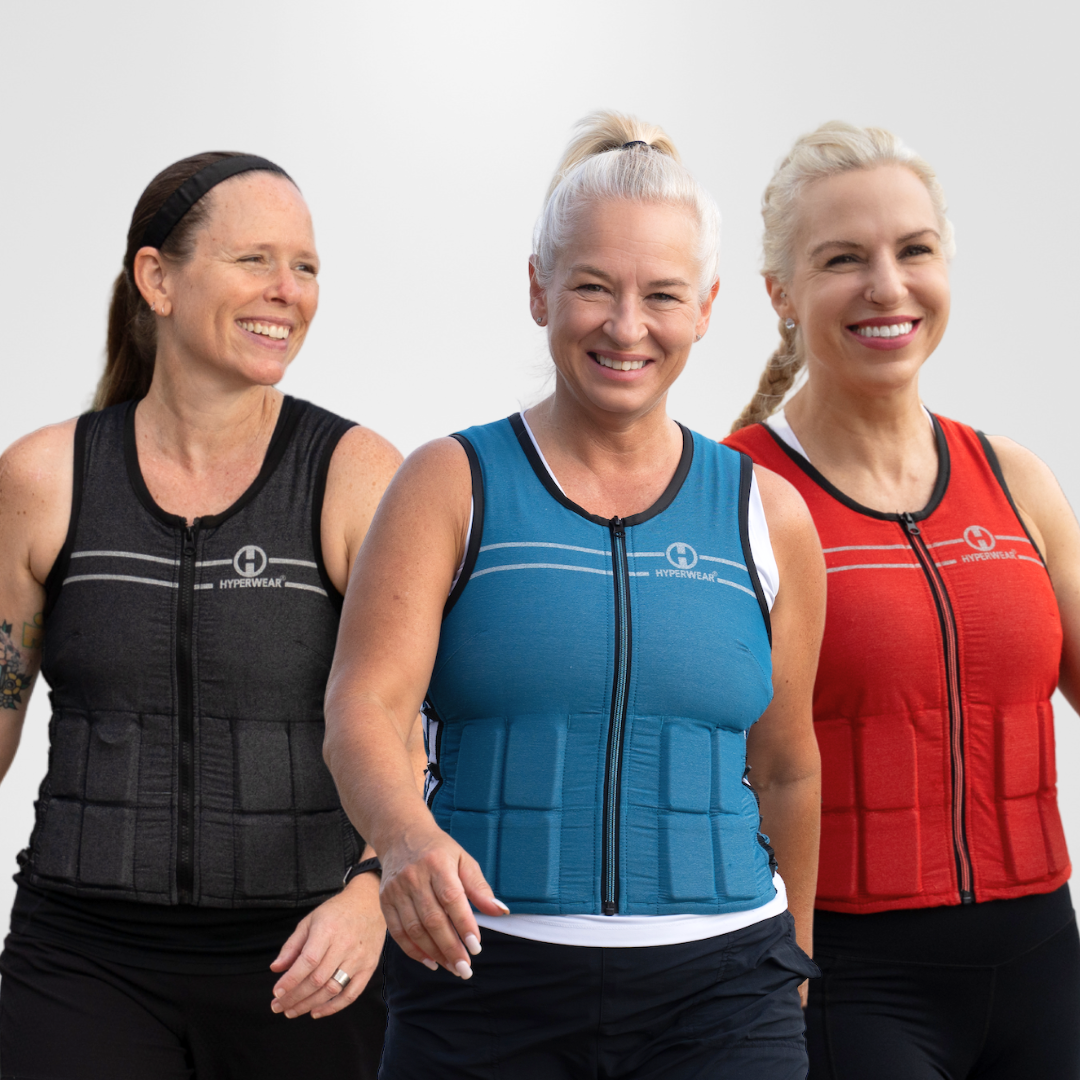
| Hyper Vest FIT | Women’s walking, wellness, daily activity, lighter progression | Designed specifically for women with no weight in the chest area and small 1/2-lb adjustments up to 10 lb. | Shop FIT |
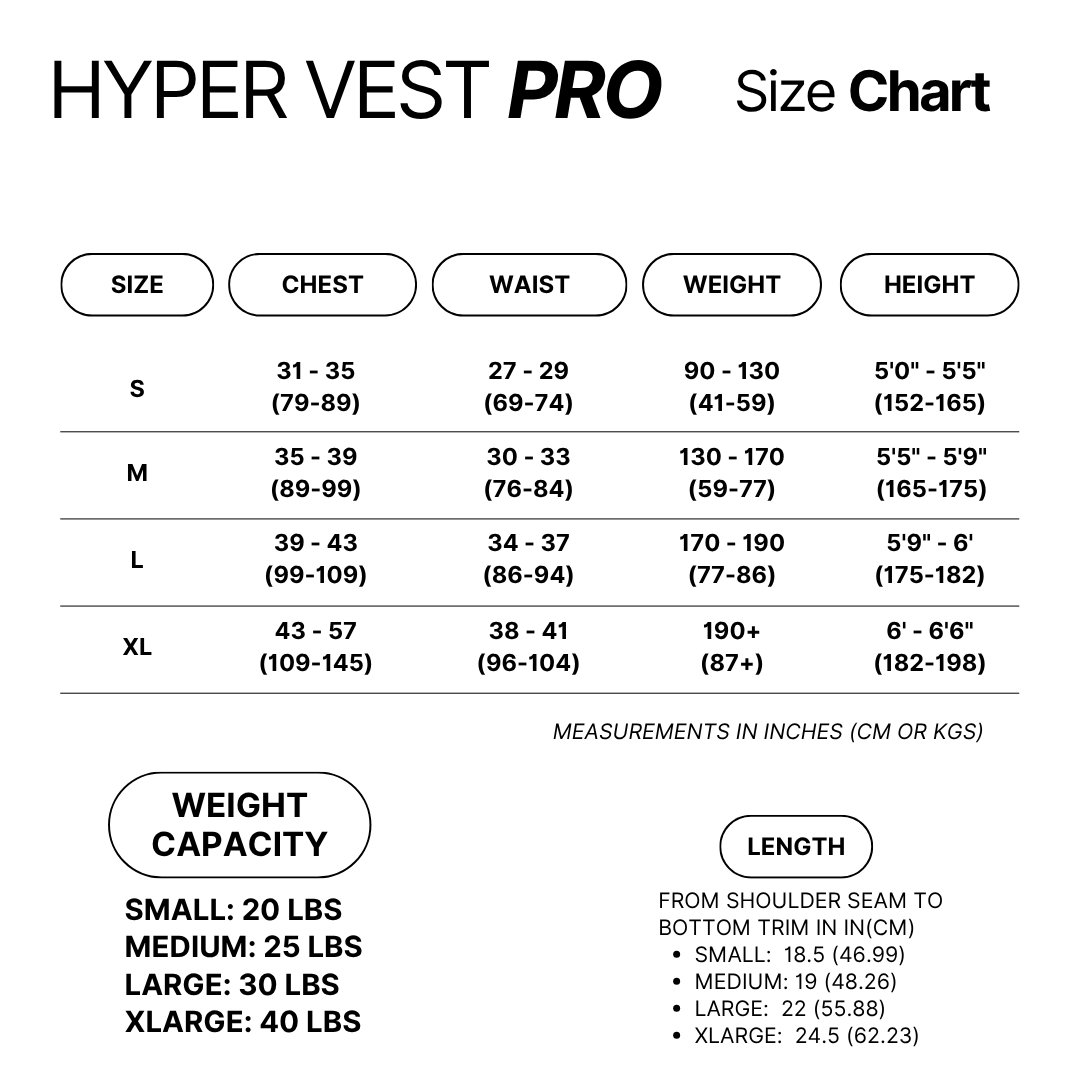
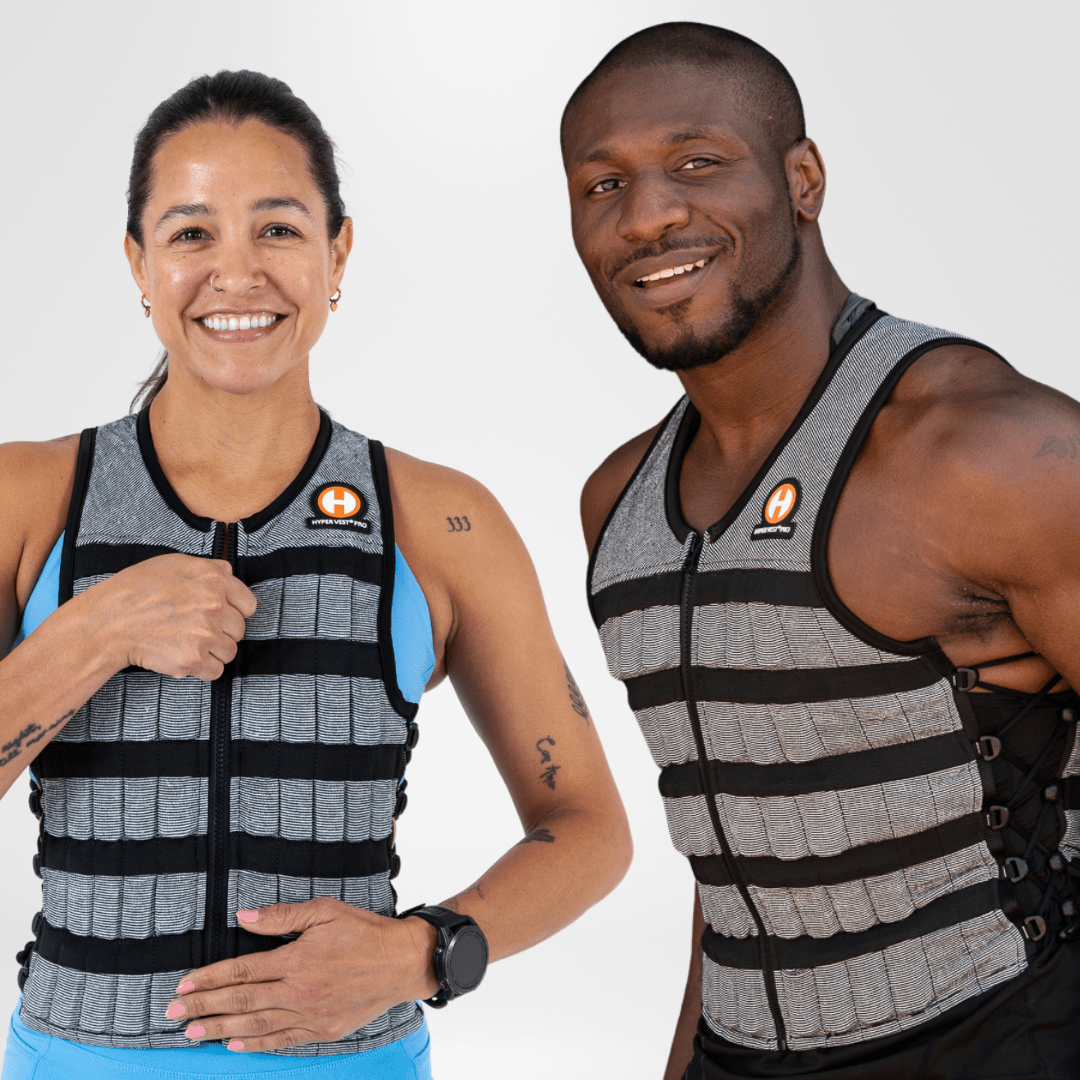
| Hyper Vest PRO | Walking, bodyweight training, cardio, weight loss, all-around use | A strong all-around vest for users who want adjustable loading across walking and training goals. | Shop PRO |
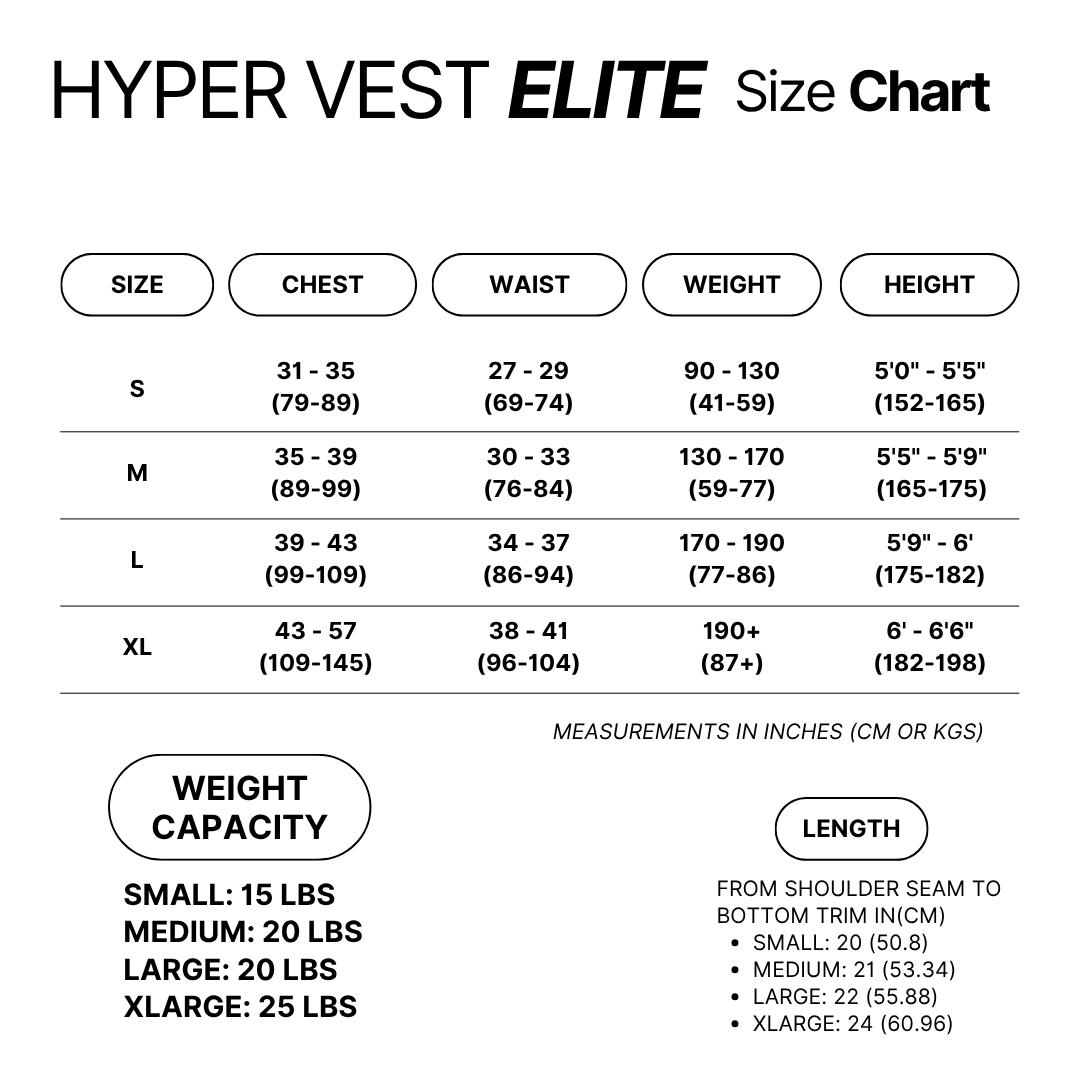
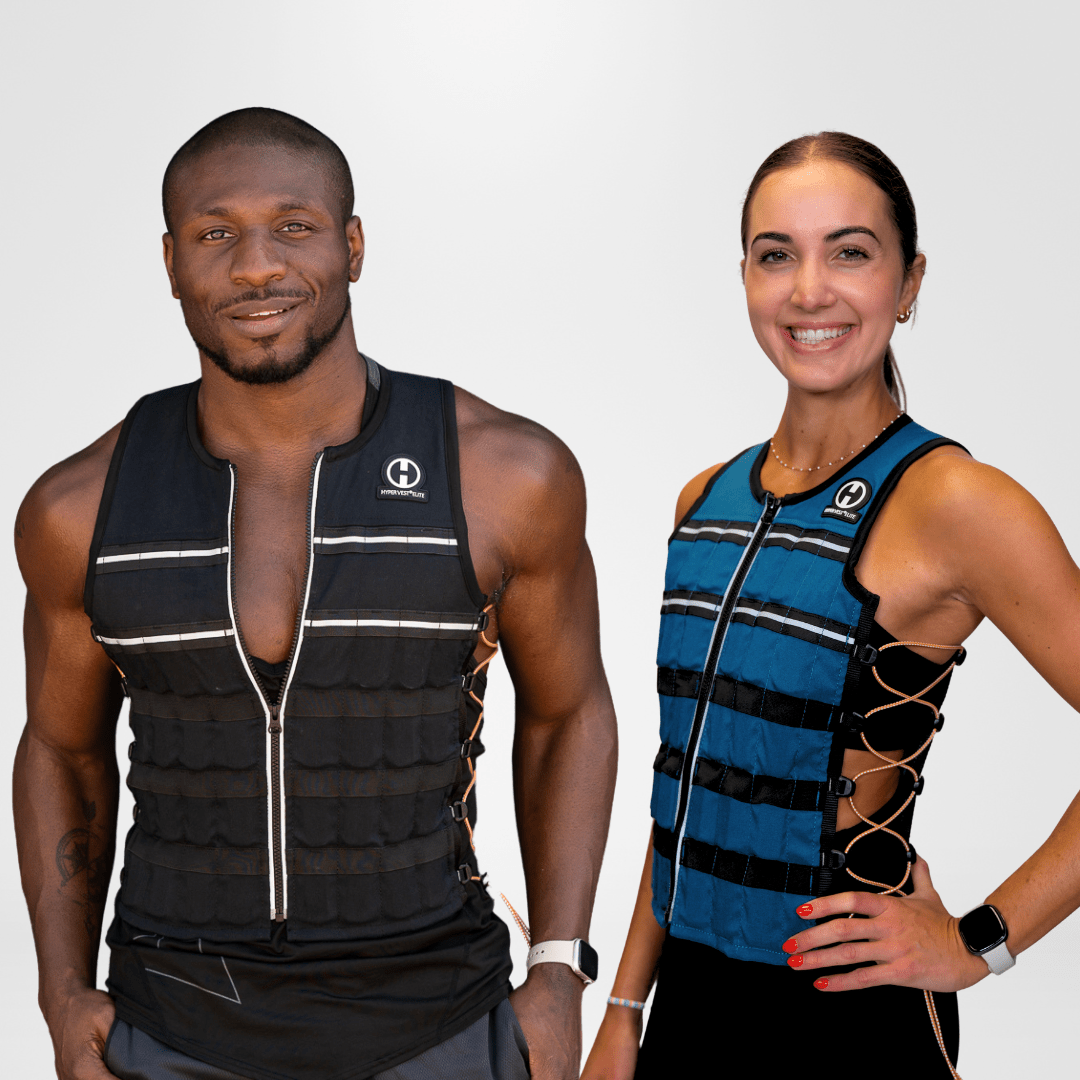
| Hyper Vest ELITE | Running, HIIT, power walking, advanced conditioning | Best for users who want high-performance fit, low bounce, and precise micro-loading. | Shop ELITE |
Compare all Hyperwear weighted vests
Progression chart: when should you add more weight?
Do not add weight just because the vest feels easy once. Add weight when you have repeated comfortable sessions with no changes in movement quality.
| Signal | What it means | Next step |
|---|---|---|
| You can walk 20–30 minutes on flat ground with normal posture | Your starting weight is probably appropriate | Add 5–10 minutes before adding weight |
| You finish with mild effort but no joint discomfort | You may be ready for more time or pace | Increase duration or speed first |
| You feel knee, hip, back, neck, or foot pain | The load, distance, speed, or fit may be too aggressive | Reduce weight or return to unloaded walking |
| The vest bounces or changes your stride | The fit is wrong or the load is too high | Refit the vest or use less weight |
| You have completed 2–4 weeks comfortably | You may be ready for a small increase | Add 1/2–2.5 lb depending on vest and goal |
Is a 20 lb weighted vest too heavy?
A 20 lb weighted vest is not automatically too heavy, but it may be too heavy for many beginners. For a 200 lb person, 20 lb is about 10% of body weight, which can be a reasonable upper starter range for an active user. For a 120 lb person, 20 lb is about 17% of body weight, which is usually too much for beginner walking.
Use percentage of body weight and activity type instead of judging by pounds alone.
Is a weighted vest good for bone density?
Weighted vests may support bone-loading because weight-bearing activity with external load increases mechanical stress. However, this topic needs nuance. UCLA Health notes that the proof for weighted vests improving bone density during walking is still limited. Harvard Health says weighted vests may help maintain bone mass by placing extra pressure on bones, but also warns about joint and muscle strain.
Research is mixed. A 2025 JAMA Network Open randomized clinical trial found that weighted vest use did not prevent weight-loss-associated hip bone loss in older adults with obesity. The same paper notes that prior studies have found promising skeletal effects in some older-women exercise programs. The practical takeaway: use weighted vests as one possible loading tool, not a guaranteed osteoporosis treatment.
If you have osteoporosis, osteopenia, balance issues, fracture history, or medical concerns, talk with a qualified healthcare professional before using a weighted vest.
Safety guidelines before choosing a heavier vest
- Start with unweighted walking if you are new to exercise.
- Use 5% of body weight as the conservative starting point for walking.
- Increase one variable at a time: time, distance, speed, hills, or weight.
- Stop if the vest causes joint pain, back pain, neck pain, dizziness, numbness, or altered gait.
- Use a vest that fits close to the body and distributes weight evenly.
- Ask a clinician before using a vest if you are pregnant or have back, neck, joint, bone-density, heart, respiratory, or balance concerns.
FAQs: weighted vest weight
How heavy should a weighted vest be?
Most beginners should start around 5% of body weight. Active users may gradually build toward 10% for walking. Strength and advanced conditioning can use heavier loads, but only if form and joint comfort stay good.
What weight weighted vest should I get?
Choose based on your main activity. For walking, choose a vest that starts around 5% of your body weight and can be adjusted upward. For running, start lighter. For strength training, choose a vest with enough capacity to progress over time.
How heavy should a weighted vest be for walking?
Start around 5% of body weight. If you weigh 150 lb, start around 7.5 lb. If you weigh 200 lb, start around 10 lb. Build time and distance before adding more weight.
How heavy should a weighted vest be for running?
Start with 5% of body weight or less. Running with a vest is more demanding than walking, so the vest should fit snugly, stay low-bounce, and never change your stride or breathing.
Is a 20 lb weighted vest enough?
For many users, yes. A 20 lb vest is 10% of body weight for a 200 lb person and more than 13% for a 150 lb person. That is enough for many walking, strength, and conditioning goals.
Is a 40 lb weighted vest too much?
A 40 lb weighted vest is too heavy for most beginners and for most walking or running plans. It may make sense for advanced strength training or rucking-style progression, but only after building up gradually.
Should I increase weight or distance first?
Increase distance or time first. Once you can move comfortably with normal posture and no joint discomfort, add small amounts of weight.
Can a weighted vest help with weight loss?
A weighted vest can increase exercise energy cost, which may support weight loss when paired with consistent activity and nutrition. It is not a shortcut; the best vest weight is the one you can use consistently without pain or poor movement.
Shop by weight goal
- Hyper Vest FIT: best for women’s walking, daily movement, lighter loading, and gradual 1/2-lb progression.
- Hyper Vest PRO: best all-around vest for walking, weight loss, strength, cardio, and everyday training.
- Hyper Vest ELITE: best for running, HIIT, power walking, and advanced conditioning.
Shop all Hyperwear weighted vests
Sources and further reading
- UCLA Health: Should you walk with a weighted vest?
- Harvard Health: What are the benefits of walking with a weighted vest?
- Looney et al., 2024: Metabolic Costs of Walking with Weighted Vests
- Beavers et al., 2025: Weighted Vest Use or Resistance Exercise to Offset Weight Loss–Associated Bone Loss in Older Adults